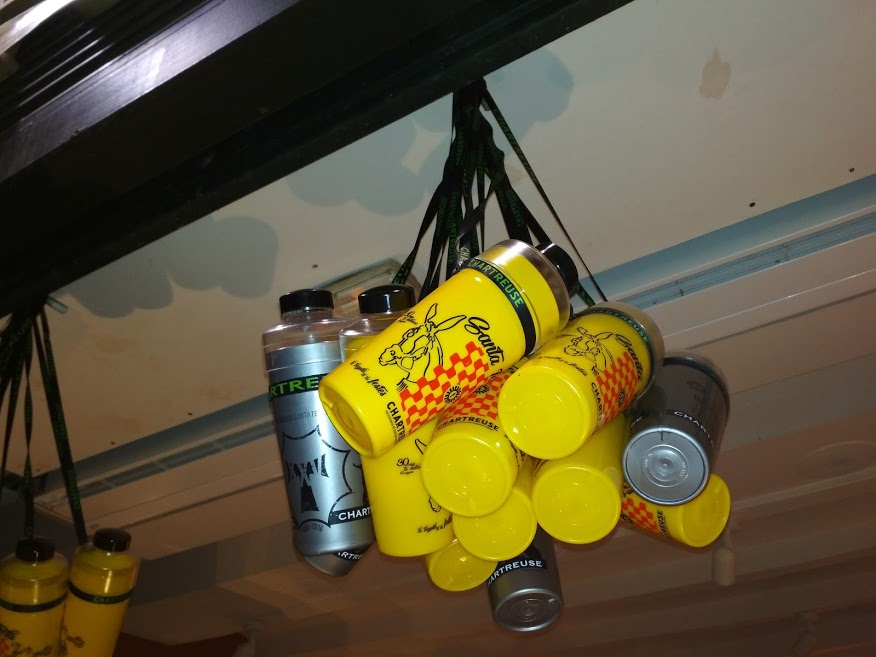
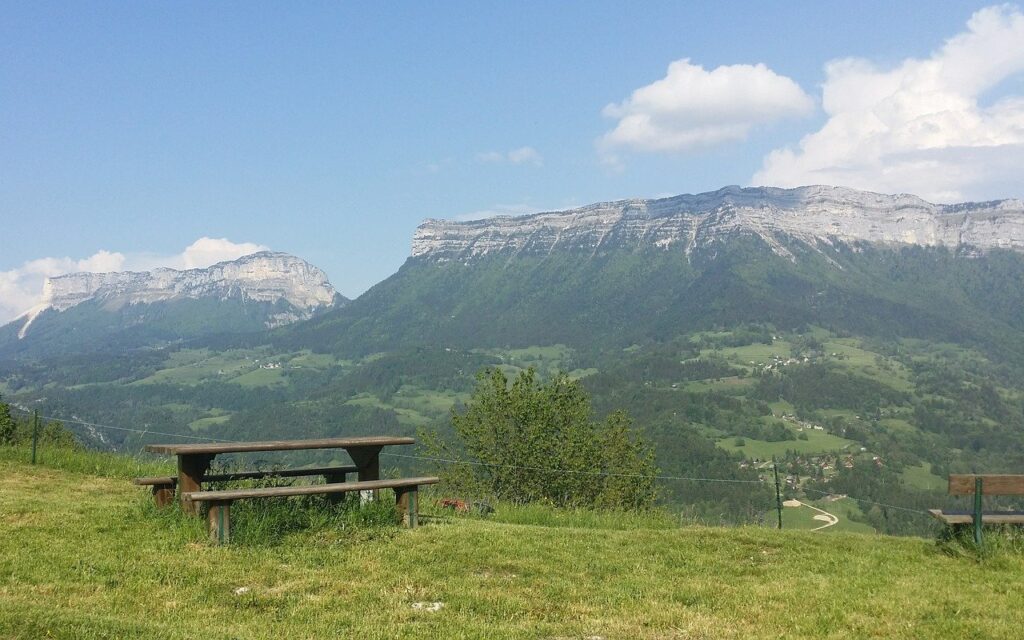
Chartreuse is an ancient and quite popular French liqueur. It is produced at the monastery, close to the city Grenoble.
History of Chartreuse
The history of the production of this liqueur begins in 1605. A legend tells that one French marshal handed over to the Cartesian monastery Grande-Chartreuse a recipe for the elixir of longevity. The monastery produced elixir for medical purposes and sold it to the inhabitants of nearby cities. In these towns, the elixir quickly became popular. The recipe was kept in secret.
Why is it so important in Catalonia
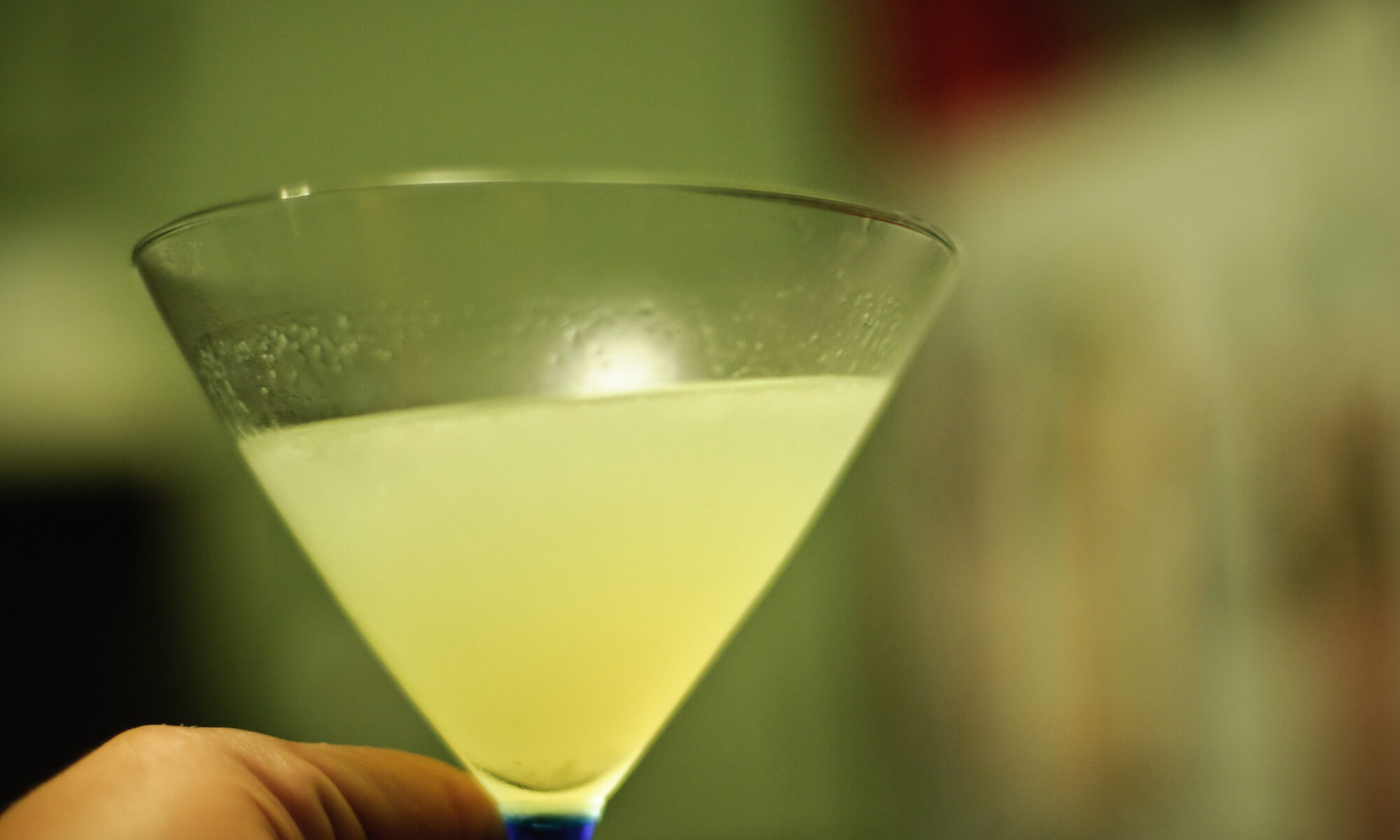
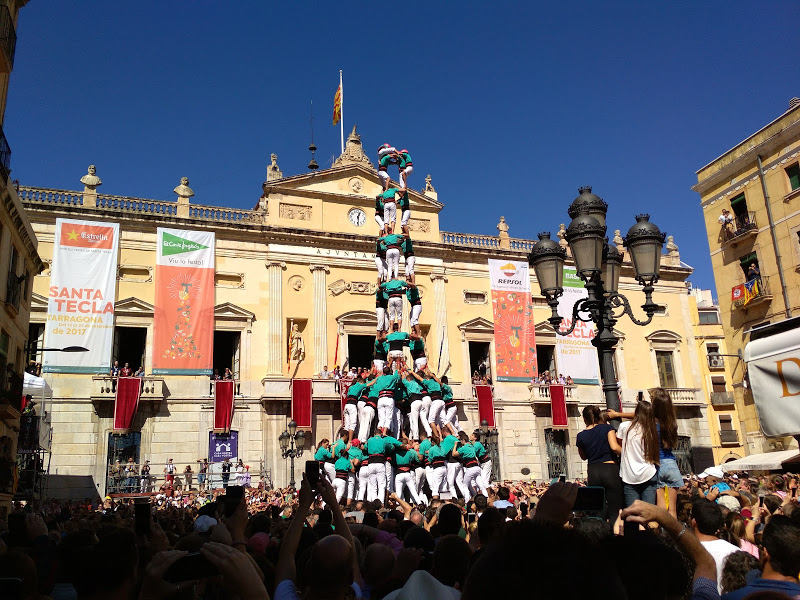
In 1903, Cartesianists were expelled from France. Their new refuge was a Catalan town Tarragona in Spain, where they also began to produce “chartreuse”. That’s why the liqueur is an integral part of the most important festival in Tarragona, called Santa Tecla. During the weeks of celebrations (Spanish people can make those crazy celebrations like nobody else in this world) chartreuse is served at every bar. It is an integral part of the local cocktail Mamadeta. Even a special glass was developed for this cocktail. Ingredients of the cocktail are yellow chartreuse, green chartreuse and citric chip. Mamedeta is a refreshing drink. It senses the acidity of the lemon. But the liqueur softens it.
Mamadeta cocktail
Santa Tecla festival in Tarragona
In 1921, Cartesian artists opened the production of chartreuse in Marseille. Liqueur there was called “Tarragona”.
Chartreuse production
Even today, the liqueur is made from a mixture of plants and herbs that are harvested by the monks of the Grande-Chartreuse monastery. Only the French company Chartreuse Diffusion has rights to produce the liqueur with this name. The main component of chartreuse is hyssop. This plant gives the liqueur a special aftertaste. 130 other herbs are also used. Basically, all herbs are collected in the mountains near the monastery. However, several components are currently imported from Italy and Switzerland. Revenue from sales of liqueur enters into the account of the monastery fund, the share of income goes to charity.
Chartreuse has a sweet, honey, slightly mint flavour. It is used as a basis for many cocktails.
The word chartreuse is also used as a colour between yellow and green. So chartreuse is both a liqueur and a colour named after it. Sometimes we taste it during wine bars crawl.
Follow my Facebook and Instagram pages to catch up all the interesting posts and news.
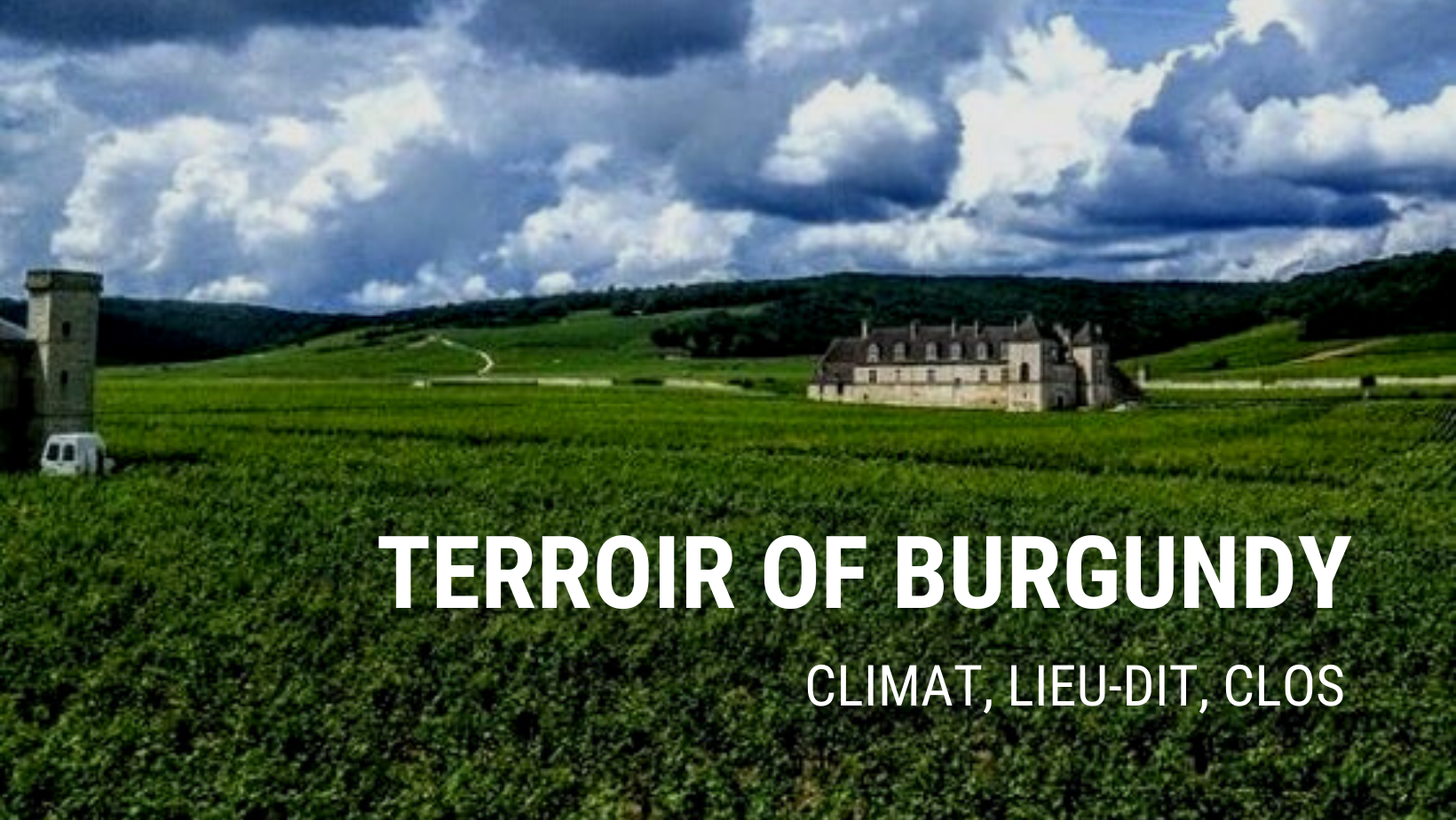
Terroir of Burgundy … Even if you are taking your first steps in the world of wine, you could hear about it. Burgundy embodies all the elegance and grandeur of the geography and culture of French winemaking. It is usually from the study of Burgundy that many wine courses and programs begin. This is one of the most popular and sought after wines in the world. Even though Burgundy is not such a large region (about 4 times smaller in area than the no less eminent Bordeaux), it is quite diverse, and when different producers, village names, separately the names of vineyards, and classifications appear on the labels, then it is very easy to get confused.
What is the terroir of Burgundy
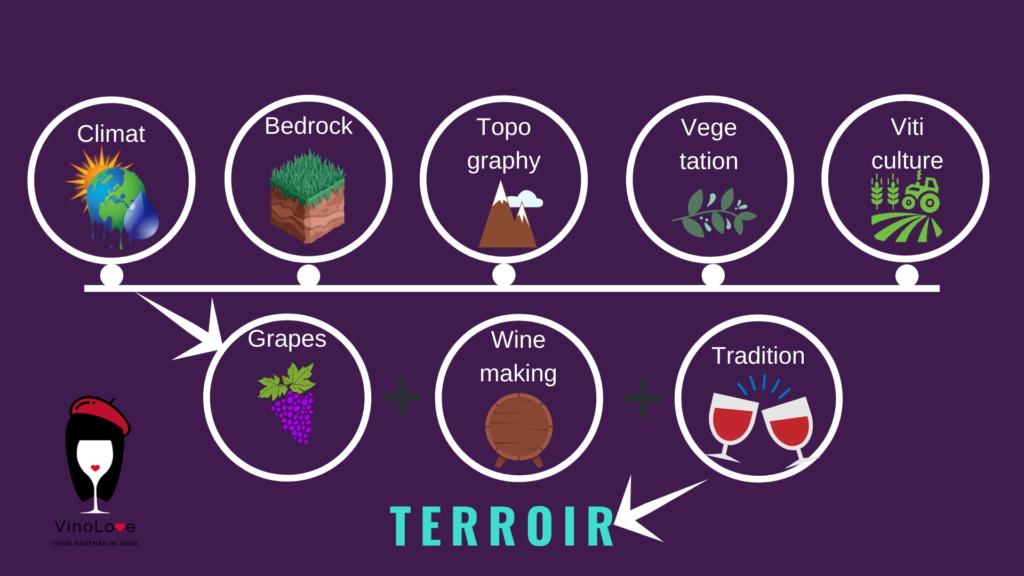
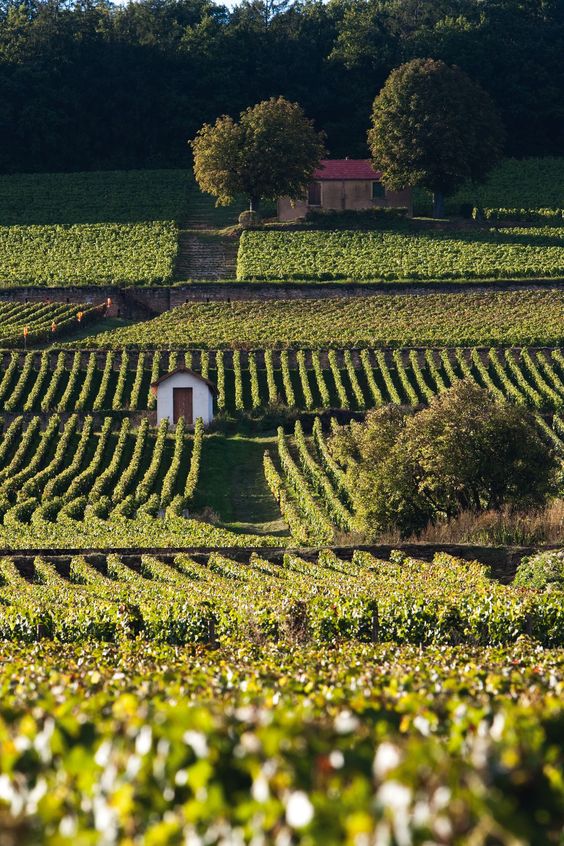
To explore Burgundy you need to start with the concept of terroir. Terroir is a complex of various natural and not only factors and characteristics of the territory that affect the quality and certain characteristics of agricultural products. This is how the land on which grapes are grown, with all its climatic, soil, hydrological, topographic, as well as viticulture and even cultural characteristics, affects the grapes and the subsequent wine produced and distinguishes it from other wines produced elsewhere. In Burgundy, the concept of terroir is treated especially carefully and scrupulously. It is simply the heart of all the terroir concepts of the winemaking world. So the Burgundian vineyards are very fragmented. The labels of Burgundy wines are replete with the names of villages, climats, and clos. Don’t worry, now let’s talk about everything in detail.
Climat
It means a piece of land, which has a special and unique terroir. Climat is more about the natural conditions of the area. There are more than a thousand of them in Burgundy. Some are known and glorified since the Middle Ages. Burgundy climats are even included in the World Heritage List. Please note that climat is not equal to any level of classification of Burgundy wines. So if, for example, a vineyard is called climat, it means that its natural conditions are special, but it can be classified as a grand cru or premier cru, even to be in an appellation of a communal or regional level.
What is Lieu-dit
Lieu-dit is a purely cadastral, that is, the administrative division of vineyards. Typically, such a parcel has topographic or historical features, so it was allocated and entered in the land registry. The concepts of Climat and Lieu-dit have no hierarchy between themselves. So one climat can include several lieu-dits, and sometimes be part of a larger lieu-dit. To explore the vineyards of Burgundy, we still need to pay more attention to Climat than to Lieu-dit.
Clos
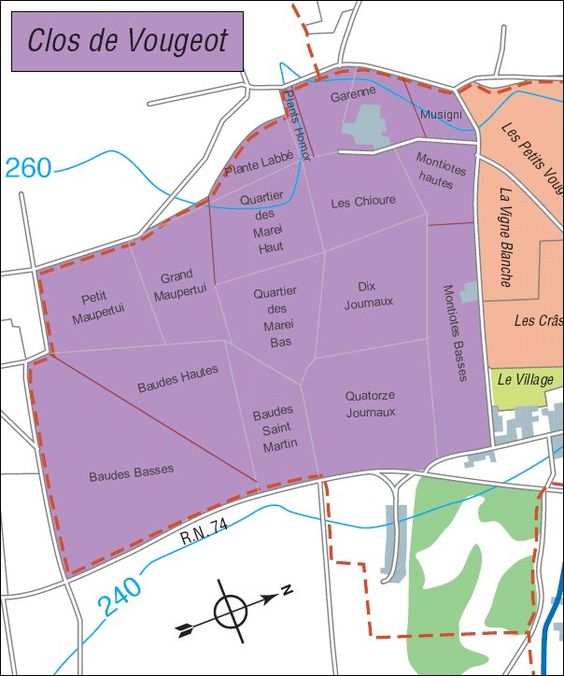
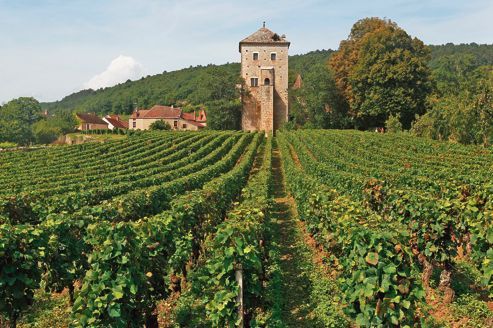
Clos is also a piece of land on which a vineyard is planted, but fenced off, with a wall, a fence, a hedge. The concept of Clos can be correlated with the concept of Chateau in Bordeaux. This is a kind of winery that can accommodate several plots, including climats.
Due to historical characteristics, the domains of Bordeaux have retained their integrity. In Burgundy after the adoption of the Napoleonic code, when the land could be inherited by all children, Clos can be very fragmented and divided among many owners. All these winegrowers can produce their wine, which may differ depending on the producer, but bear the name of the same Clos as a tribute to the historical heritage. After all, clos is a very traditional name. It is regulated by the European Union and can be put on the label if the wine is made exclusively from grapes grown within the specified Clos.
So, to buy a good Burgundy wine, you need to have something like a matrix system, where the following dimensions will be:
terroir (appellation, climat, clos)
producer (since one vineyard can be divided among different producers, which will produce wines of different qualities)
vintage (from year to year, depending on weather conditions, the wines may differ from each other).
Does this sound complicated? Well, I will not lie to you and say no. It’s difficult, but interesting, especially the further we move forward. Let’s go on this wine journey together, it will be more fun and useful! Subscribe to my pages on Facebook, Instagram or Telegram to keep track of all new publications.
If you are travelling to Provence, Cote d’Azur, Nice, then your vacation would be incomplete without tasting local wine and local cuisine. Wine and gastronomy is a special cult and part of the local culture. I write a lot on my blog about the peculiarities of wines and food, I hope this information is useful to you. But here are a few rules to be familiar with before you go to one of the French Riviera restaurants. It doesn’t even matter whether it will be a gourmet restaurant with Michelin stars and stunning views or an urban cute restaurant in Nice and its surroundings. In any case, it will be useful for you to know:
Bread or grissini is always served on the table. The bread can be served with olive oil. While you’re sipping your aperitif, try soaking a slice of fresh crispy bread in the aromatic olive oil from around here. Taste it with wine. Yummy? Divine! Especially if you have walked several kilometres before taking a city tour. Wine, bread and olive oil are the main agricultural products of the Mediterranean. Try and enjoy this Mediterranean diet. How simple and how delicious!
Water. Any establishment will refuse to serve you some water. The water carafe is always free. If you’ve finished, don’t hesitate to ask for more. Drink more water, it’s healthy! Especially if a certain amount of wine is also present during your meal.
3. All other drinks, besides wine and water, make you a tourist. Smoothies and juices are for breakfast only. Coffee after meals. A cocktail is like an aperitif before meals and is better in another place without a hint of gastronomy. Beer? Maybe, of course, but how can you be in the Mediterranean and not taste the local historical drink – wine? Coca-Cola, Pepsi, what else is there? Forget it forever! Unless only children will be given indulgence on this score.
4. The order of the dishes is always strictly defined. First an aperitif. Next are snacks, then main courses. Then there may be cheese (if the restaurant is more French). Dessert at the end. Coffee. Digestif. Dessert is usually not immediately ordered. When you finish the main courses, a dessert menu will be brought to you. If you are several people and you ordered dishes from different categories, then usually the order of taking out dishes is always regulated. Until your neighbour finishes his appetizer, you will not get the main course (unless you ask).
5. Coffee with dessert is perceived as nonsense here. First dessert, then coffee. This is the age-old order. Coffee is perceived here as a drink with which you can cheer up after a hearty dinner and wine, and not as an appendage to dessert. Then tea? You can, of course, order, it is customary to drink tea much less often than coffee. Rather, it is perceived as a medicinal or sedative drink. So if you don’t want to be considered a sick or nervous person, order a wine that matches your dessert and enjoy another successful combination of wine and food pairing.
6. Most coffee is espresso. There are two types: “short” – stronger and “long” – more diluted with water. But even if you order a “long” coffee, do not think that they will bring you a large mug of Americano. No, it will still be a small cup of strong espresso. Cappuccino, Latte and all their varieties are just pampering for breakfast or brunch.
7. Each restaurant usually has a day off. So if you have planned a trip to a certain place just for the sake of one of the recommended restaurants, then it is better to initially clarify whether it is open on that day and book a table.
8. And the most important thing! Do not forget that the locals eat always at the same time. And restaurants are also open during certain traditional eating hours. Lunch is usually served from noon to 14.30. Dinner starts from 19.00 to 21.30. These are approximate times and may vary slightly depending on the season, region, restaurant. But in general, it’s best to remember that between 2:30 pm and 7:00 pm you can hardly find where to eat. And if you find it, then you should know that this place is focused exclusively on tourists, and it is unlikely that there will be something authentic there.
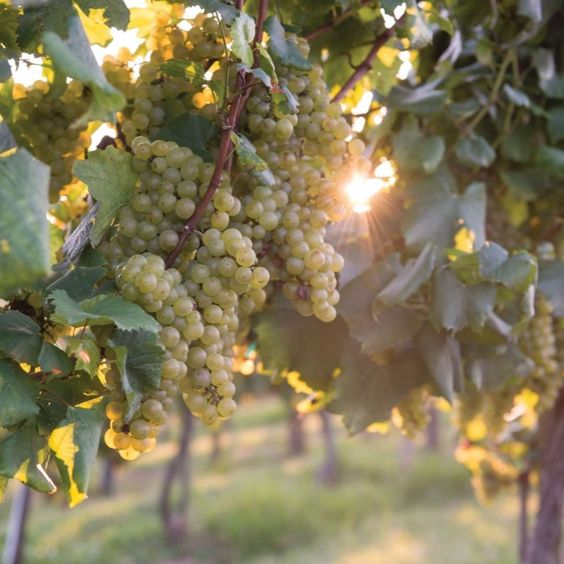
Characteristics and quality of wine are directly depended on the state of grapes maturity, which will determine the day of harvest. A large number of factors influence the quality of grapes: grapes variety; technics of harvest and transportation. Grapes maturity can consist of 6 main parameters:
Increasing of berry volume;
Accumulation of sugar
Drop of acidity
Accumulation of phenolic compounds
Synthesis of odorous molecules
Modification of different substances: polysaccharides etc.
Factors influence the quality of grapes:
Permanent viticulture factors: variety, rootstock, soil, age of a vineyard.
Changeable viticulture factors: climatic factors.
Alterable viticulture factors: density of the plantation, training system, vegetation layout, viticulture methods.
Manual harvest: whole grapes, sorting of grapes, small trituration.
Mechanic harvest: more crushed berries, less of sorting.
Transportation of harvest
To control maturity we measure potential alcohol level and total acidity at the laboratory. Firstly we pick the berries from different parts of the parcel and cluster. Then we crush them, add sodium to the juice till it gets blue. The amount of used sodium multiplies on 0.49, so we get total acidity. The potential alcohol is measured with a refractometer. Thus we have got the next results:
Nitrogen level
pH
Total acidity
Malic acid level.
The other method to control maturity is grapes tasting. Grapes are chosen by accident. The observations are made in the next directions:
1. Tactile examination of the whole berry:
– Crush worthiness
– Ginning ability
2. Visual examination of skin: the colour of the berry
3. Gustatory examination of pulp:
– Adherence between pulp and skin
– Sweetness of pulp
– Acidity of pulp
– Aromas of pulp
– The intensity of dominant aromas of the pulp
4. Gustatory examination of skin:
– The tannic intensity of the skin
– Acidity of skin
– The astringency of the skin
– Dryness of tannins
– Aromas of the skin
– The intensity of the dominant aromas of the skin
5. Visual examination of seed: colour
6. Gustatory examination of seed:
– Crashworthiness
– Aromas
– Tannic intensity
– Astringency.
Follow me on Facebook and Instagram to be updated about the new content.
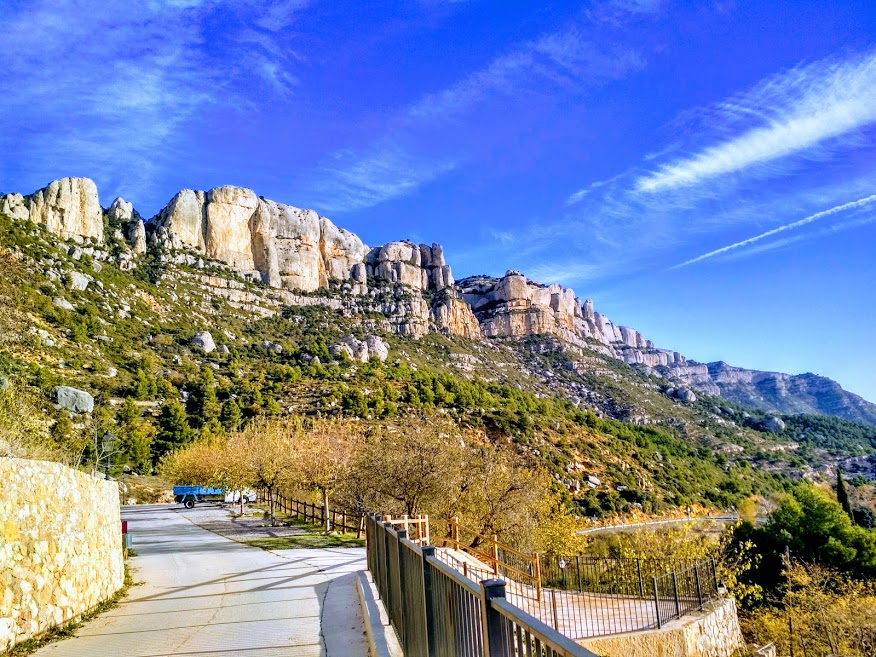
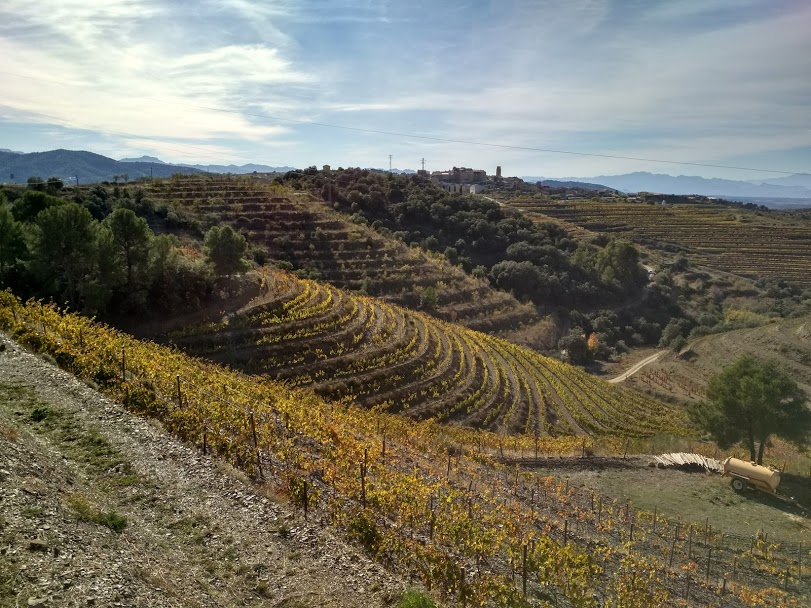
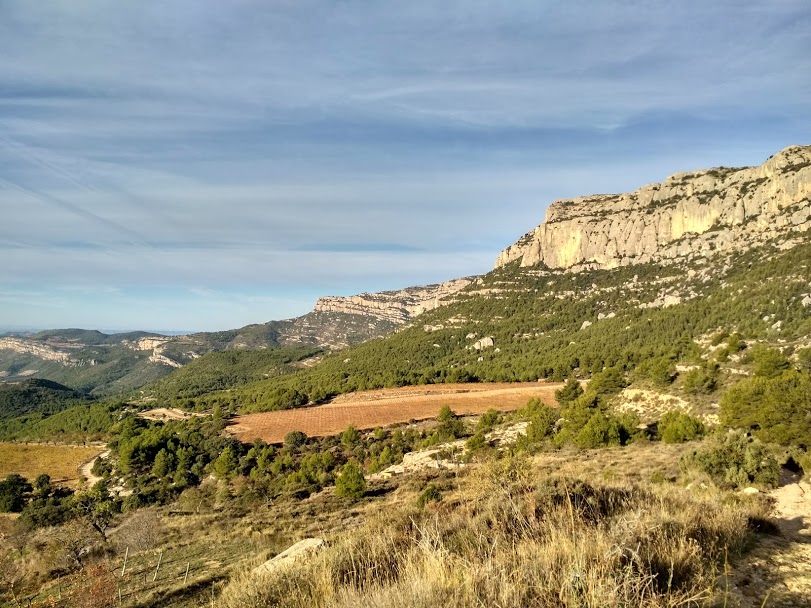
Priorat is a wine region located in the pre-coastal mountain range of Catalonia. Between the Campo de Tarragona and the Tierras del Ebro. It is a little wine land with 23 villages and 2 hamlets. The capital of the region is Falset. Priorat is characterized for being a very abrupt terrain, without any plain and with the presence of the mountain of Montsant, a symbol of the region, which occupies the northern part of the region, while to the south is the Sierra de Llaberia and for the east the Prades mountains. The predominant labour activity and the base of its economy is agriculture. 20% of the population is dedicated to this sector. Most of these crops are almonds, hazelnuts, olives and vineyards.
Talking about the vineyards, the wines are of a high quality which is geographically identified by two denominations of origin: the Qualified Denomination of Origin Priorat (central part of the region) and the Denomination of Origin of the Montsant. Priorat is one of the of two regions from Spain that has been awarded the highest wine qualification, DOQ. The DOQ comprises the valleys of the rivers Siurana and Montsant.
What to see in Priorat
Siurana. It is a small fairytale village which was the last Moorish stronghold in Catalonia reconquered in the XII century.
The Montsant National Park. It is not one of the highest mountains. Its geography is unquestionable.
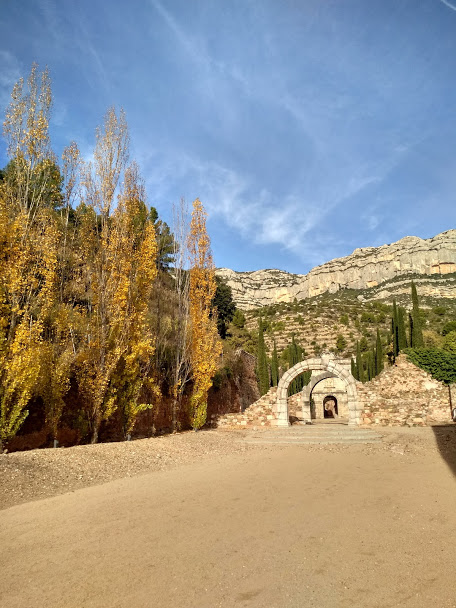
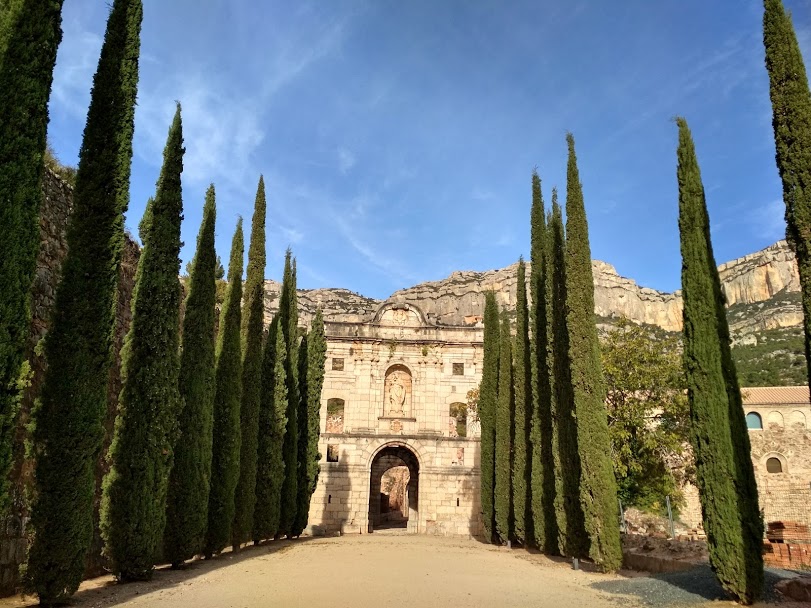
The Carthusian Priory of Escaladei. The first Carthusian Priory in the Iberian Peninsula founded in the XII century.
Bellmunt Mining Museum. The Eugènia mine was the largest and most important of the mines in the Priorat region. There is 14 km of underground galleries and it goes down to 620 m.
A wine region with two hearts – 167 wineries in total (101 DOQ Priorat and 61 DO Montsant).
Olive oil routes. You can learn about the process of elaboration and the characteristics of the various mills. The Priorat Olive Growers Association is currently made up of eight member cooperatives with a total of 1,290 growers
Even if the region is small, it has a wide range of places of interest. Below is a list of some of the most recommended places to discover while in Priorat:
Hotel in Priorat
Montsant
Festivals in Priorat
Plenty of festivals take place in the Priorat region, however, four most important dates in the Priorat festival calendar are:
Weekend closest to Sant Anthony’s day, 17th January: L’Encamisada de Falset
Second Sunday in March. Festa de la Truita amb Suc d’Ulldemolins (Festival of the Omelette in its own sauce)
The first weekend of May: Fira del Vi de Falset (Falset Wine Fair)
Second Saturday of September. Festa de la Verema a l’Antiga de Poboleda (Old style Wine Harvest Festival)
How to get to Priorat
One of the biggest weaknesses for the region is the accessibility. Priorat has a very limited infrastructure that makes the region to be reached quite difficult. The nearest airport is Reus, which is situated at around 30 minutes from Falset. To reach the region from Barcelona airport it takes around 2:30 hours. Another option to get to Priorat is some limited bus lines from Tarragona, Barcelona or Reus. However, in order to be able to move around the area, the only option is a private car.
The last time I did a selection of songs about wine, I realized that there are a lot more wine songs than could fit in one post. Therefore, here I present to you the second part of my playlist for wine lovers, where you will find not only the songs but also the wines to which, in my humble opinion, they are suitable.
Let’s start with the gentle and delicate Irish Damien Rice and his song Cheers Darling. This song, despite the supposedly promising funny name (after all, we say Cheers when we celebrate something) is sad enough! But how beautiful it is, such refined sadness, the sweet bitterness of the sorrow of the lyrical hero. I would like to pour myself a glass of some delicate, but nevertheless bright and magnificent wine and enjoy. It would be ideal for rose champagne for breakfast, to smile at the sun and say “Cheers Darling” to someone very sweetheart, whether this person is close or far!
Then a little bit of classics with Neil Diamond and his song Red, Red, Wine. Here the song about wine is also sad, and also about lost love.
Red, red wine, Go to my head Make me forget that I, Still need her so
But I imagine a languid evening, when after a glass of heady, strong, powerful and delicious red wine, for example from the French region of Cahors, you want to invite the most beautiful girl to dance.
Billy Joel with his song Piano Man gives us very positive emotions. Imagine how you go to your familiar and beloved bar. The bartender is your friend and knows exactly what you like. An atmosphere is pleasant. The pianist plays a familiar favourite song. You feel at home. How nice to be in this good old “your” bar. And among the conversations, music, familiar smiles, the bartender gives you a glass of vermouth, simple and honest. How nice to be here now!
And to add some more pleasant nostalgia we go to the Eagles – Hotel California.
Mirrors on the ceiling, the pink champagne on ice And she said ‘We are all just prisoners here, of our own device
This song is a legend! It contains several references to wine.
So I called up the captain, Please bring me my wine, He said “We haven’t had that spirit here since 1969
supposedly backs this up as the hospital staff used to give wine to the patients to calm them before dinner. This practice was halted in -you guessed it- 1969.
You, like many hippies, can start drinking pink champagne on ice after this song. But I imagine a road trip when you stop in an unfamiliar bar in an unfamiliar city and get a little tired of the road and want to relax, take a fresh cold glass of sparkling wine! Not Champagne, but simply that which is found in this godforsaken place on the road. But the coolness, freshness and pleasant bubble do their job, you go to your “Hotel California” tired, but happy.
https://www.youtube.com/watch?v=EqPtz5qN7HM
Since the summer is almost here, you cannot avoid the song Summer Wine by Lana Del Rey. This cover is now better known than the original, recorded several decades earlier by Nancy Sinatra and Lee Hazlewood. Listen to both versions and choose one for yourself. The beginning is very romantic. A woman invites a man to share summer wine with her. But in the end, a drunk and seduced man wakes up alone and robbed. So be careful! Nevertheless, do not stop trusting beautiful women and drinking wine with them. As an example, fragrant, fresh Riesling. I think it is a great seductive summer wine!
I could not help but include a song about sherry in this selection of songs about wine. And this is quite an old funny song called Elvira by The Oak Ridge Boys.
Eyes that look like heaven, lips like sherry wine.
What to drink for this song? Well, here it is obvious! Sherry! By the way, sherry is a fortified wine produced in southern Spain. It can be dry, sweet, or even very sweet. It is can be light and full-bodied. Sherry is diverse and beautiful, for this reason I love it. So, you will definitely find your style among the abundance.
There is a great song about wine from Johnny Cash. It is called Melva’s Wine. This song is about family traditions, old friends, pleasant songs, native places, affections. It’s good to listen to it with someone you know well, whom you trust. You know, such an evening when you open a bottle of fresh, pleasant, but little-known wine. After all, you want to give your beloved one or friends a taste of something new from your recent discoveries(try to surprise your friends with wine from Terra Alta, for example). You pour wine into glasses, taste it, and with the phrase “Do you remember …?” your conversations cannot be stopped until morning.
And today we’ll finish with my favorite Beatles with their cheerful song When I’m 64. These musicians make me smile under any circumstances. And especially when they make songs about wine.
When I get older losing my hair, Many years from now Will you still be sending me a valentine, Birthday greetings, bottle of wine?
Cute! Indeed it is! We rejoice at our great victories, but only pleasant little things make us happy. So I can’t imagine what could be better if you are sent a nice postcard and a bottle of good wine as a present? What can be compared with drinking a bottle of the best wine with those you love? Those who will share with you these little joys of life even at 64. By the way, unfortunately, only Paul and Ringo survived to those 64 among the legendary four. But nevertheless, they continue to make our lives better with their creativity.
Well, I hope that you have someone to send postcards and bottles of your favorite wine to! If you doubt, which wine to choose, take a sparkling wine! It is suitable for any holiday, when you are 20, and when you are 64!
Listen to good music, drink good wine, share it with your loved ones and be happy! Cheers, darlings!
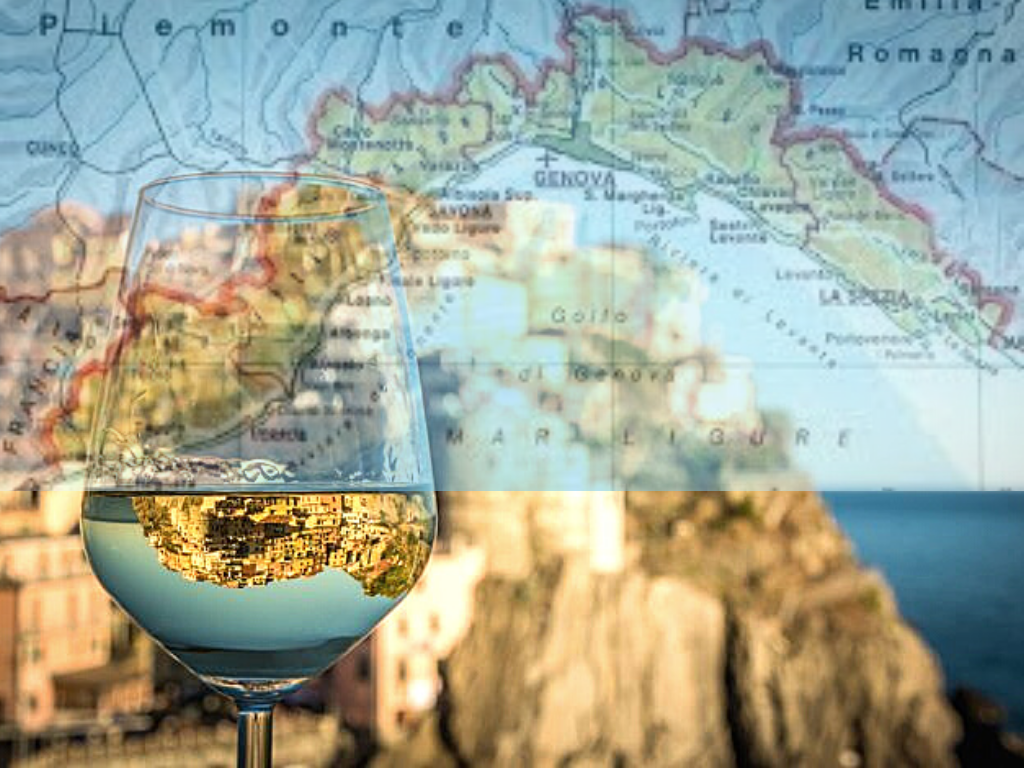
Hi friends! Today we are going to the north-west of Italy, to the Liguria region. It is an Italian continuation of the French Riviera. And both regions have much in common in the historical, cultural and gastronomic context. It is located on the shores of the Mediterranean Sea. Here you will see not only sea landscapes but also the foothills of the Alps. You can also enjoy simple but very delicious food and wine of Liguria joining Food Tours in Italy.
Pesto
The most famous ingredient in Ligurian cuisine is pesto sauce. This region is considered to be the birthplace of the sauce. Not surprisingly, all the ingredients for this sauce are Liguria’s best local products. Olive oil, basil, garlic, pine seeds, hard sheep’s cheese. Be sure to taste the local lasagna with pesto.
Simple street food of Liguria
Like all Italians, locals eat a lot of dough dishes. You can experience this on the Food Tours in Italy.
Focaccia Genovese
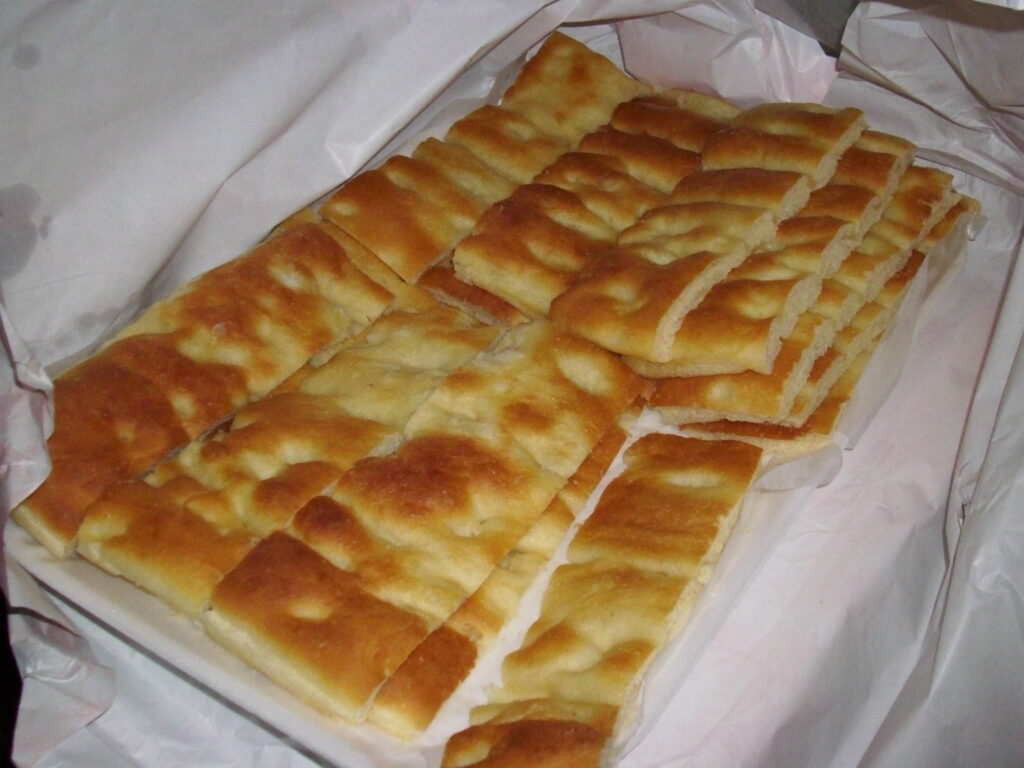
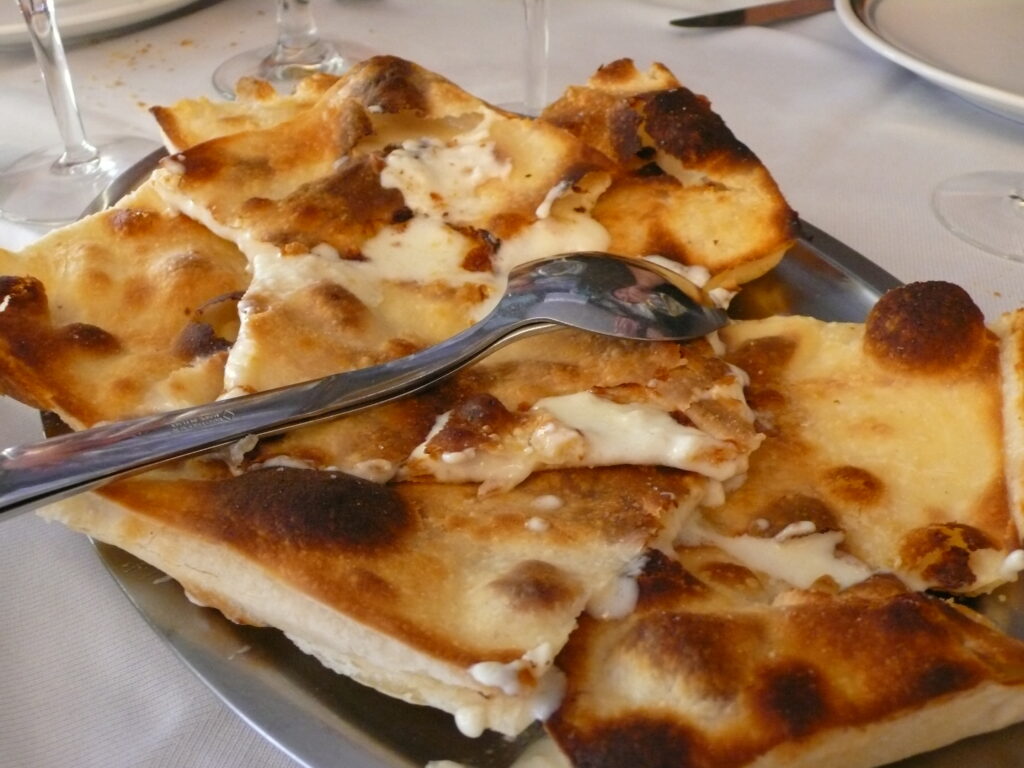
Focaccia, a traditional Italian wheat tortilla, is very popular. Its dough is insanely simple: flour, water and olive oil. But how delicious it can be! In Liguria, you will most often find Focaccia Genovese and Focaccia di Recco. The first is pretty simple. Thin tortilla with olive oil and salt, sometimes with onions. Focaccia di Recco has two layers. It can be stuffed inside with cheese, and sausage, sprinkled with garlic, pepper, and herbs.
Focaccia di Recco
Farinata (Faina in Genoa and Socca in Nice) is a thin tortilla made from chickpea flour. This seemingly simple cake made in an open oven is very tasty. It is popular not only in northwestern Italy and on the French Riviera, but even in Uruguay and Argentina. Ligurian immigrants brought local recipes with them to South America. There, this dish is also called Faina. Faina, Farinata or Socca is the most popular street food on the Mediterranean coast from Nice to Tuscany. In Genoa, you can find faina with onions and artichokes. They say that the tradition here is fainâ co i gianchetti.
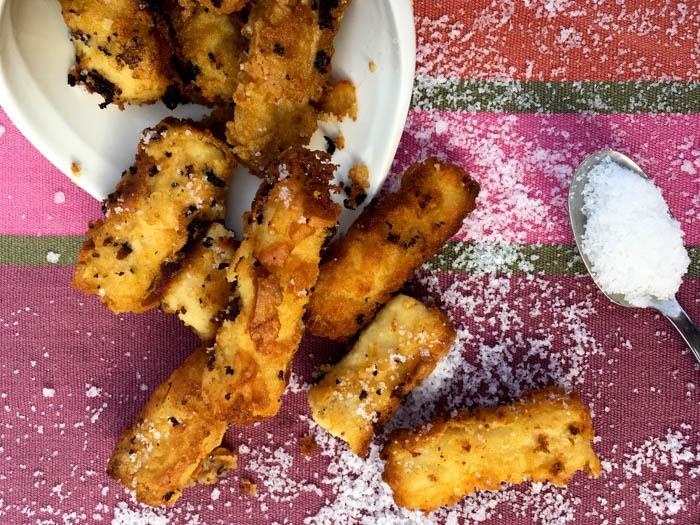
Panissa is another local Ligurian speciality. It is made from the same chickpea flour, also cooked in the oven. But Faina or Socca is baked as a whole big pancake. Panissa is like little pancakes in olive oil. You will also find panissa among the Provence specialities.
Panissa
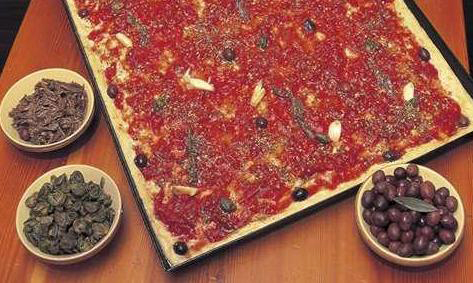
Sardenaira is like pizza without cheese. Although many claims that this dish is closer to focaccia. It is very similar to street food in Nice called pissaladière. This name comes from the older one – pizza all’Andrea in honor of the Genoese admiral Andrea Doria (1466-1560), whose favourite food was a piece of bread with olive oil, garlic and salted anchovy. It is said that it was Sardenaira that became the basis of Napoletana pizza recipe before the discovery of America by Columbus and the appearance of tomatoes in Europe.
Sardenaira
Seafood in Liguria
Liguria descends from the mountains to the sea coast. Therefore it is a sin not to taste fish here. For example, you will find anchovies in all interpretations: fried, stuffed, fresh, canned.
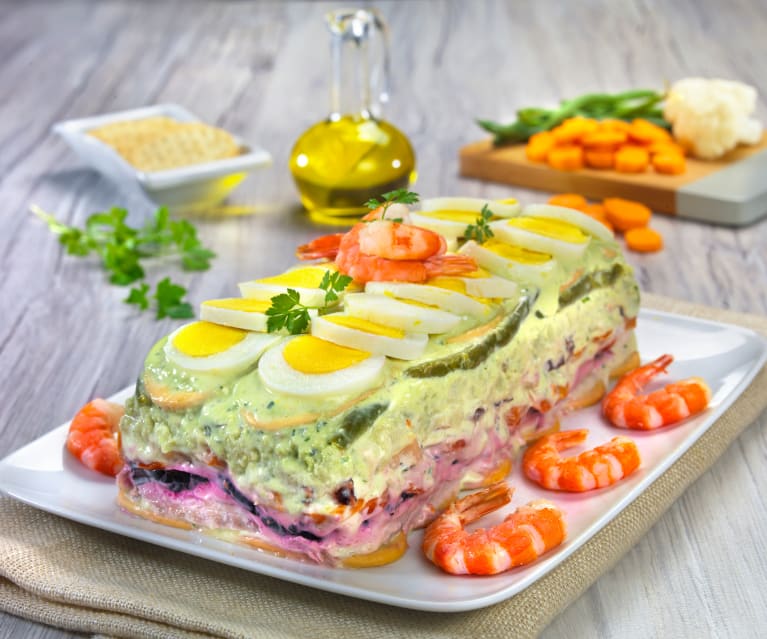
Cappon magro or capponata. You must have heard of Nisois salad, and so there is a Genoese salad. It consists of seafood and vegetables, laid out in the likeness of a biscuit in the form of a pyramid. Inside you have tomatoes, cucumbers, peppers, lettuce, eggs, bottarga (caviar of mullet or tuna), dried tuna. All this is seasoned with local olive oil. Lobster is placed on top of such a pyramid. Capponata is a traditional dish for Christmas dinner in Liguria. If you still want to taste the Nicoise salad, in Liguria it is called Insalata nizzarda.
Cappon magro
Buridda ligure is a traditional Ligurian fish soup. Sometimes it can be like a stew. Several types of fish can be used at once, as well as seafood such as squid, shellfish and mussels. In Genova, they often use octopus and shrimps. In Provence, a similar soup can be found under the name bourride.
What else to taste in Liguria?
Torta verde or tôrta pasqualinn-a is a salty cake traditional for the Easter table. After fasting, eggs and cheese, the ingredients of the cake, began to be eaten on Easter. Sometimes they add artichokes, peas, vegetables. But traditionally in Genova, this pie is made with a mangold – a subset of beets. Sometimes you can even find sweet versions of this cake.
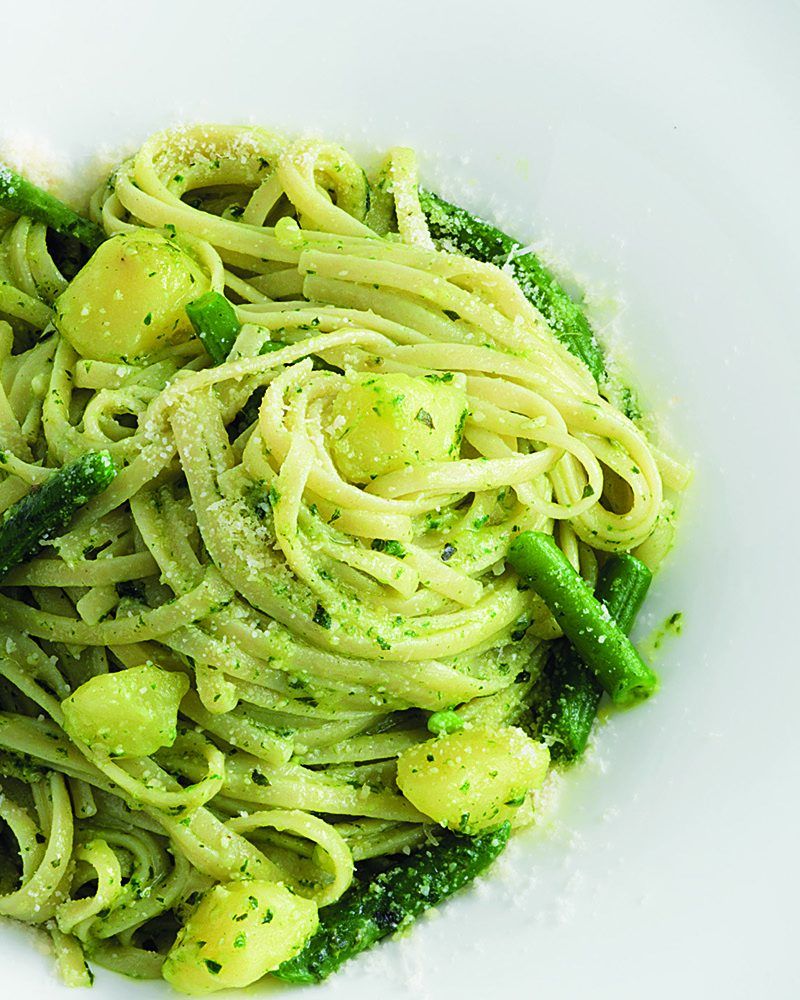
Trenette al pesto. Trenette is a narrow flat pasta popular in Liguria. Served with pesto.
Trenette al pesto
Risotto con castagne e latte – risotto with chestnuts and milk.
Coniglio alla Ligure – rabbit stewed in white wine.
Desserts of Liguria
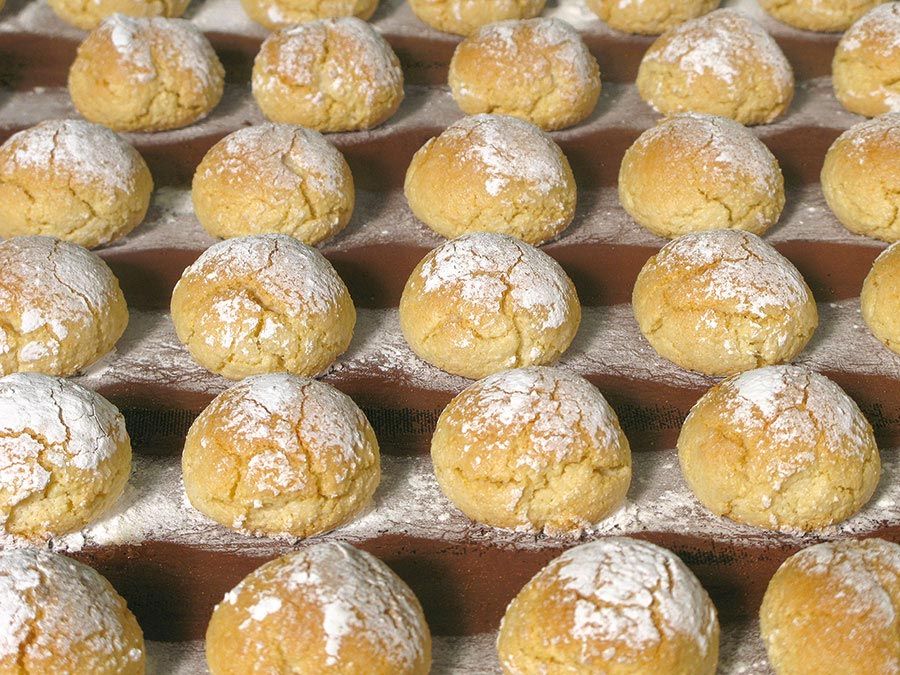
Amaretti di Sassello is local macaroons. It is popular in different regions of Italy, but each has its own recipe and vision of real Amaretti.
Amaretti di Sassello
Canestrelli is a traditional cookie for Piedmont, Liguria and Corsica.
Pandolce Genovese or Genova cake is a fruit cake with raisins, candied fruits, almonds, zest and pine nuts.
Wine of Liguria
Wine deserves a separate post. Here I would like to say that food and wine of Liguria always went hand in hand, as in other regions of the Mediterranean. Therefore, to complete the gastronomic pleasure in Liguria, it is better to pair wine and food!
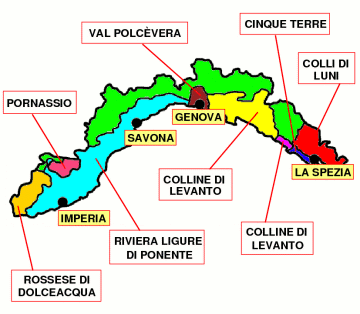
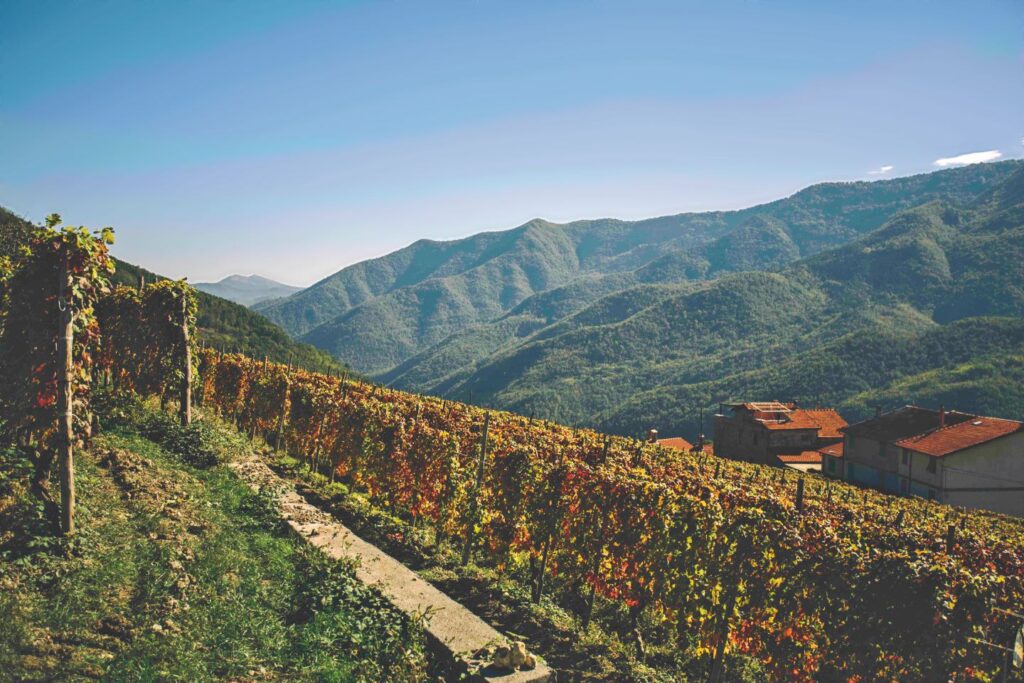
The most famous wine sub-region of Liguria is, perhaps, the Cinque Terre. It is known primarily because of its tourist significance. People travel, come here, walk along the vineyards on cliffs, eat at local restaurants, taste local wine and then often associate all of Liguria winemaking with the Cinque Terre. And that does not reflect all the reality. They produce wine in Cinque Terre, but in very small quantities. So it is quite difficult to find it outside of Liguria. But if you find yourself in one of these charming villages, then do not miss the opportunity to taste local wine. It is made of white varieties Vermentino (in Nice and Provence it is called Rolle), Bosco, Alborola. It will be light, fresh, fruity wine. Sweet Sciacchetra wine is also produced here. Grapes are dried in the sun.
At the very border with France and not far from Nice there is another appellation – Dolceaqua. They produce red wine from the autochthonous variety – Rossese.
Closer to the east and Tuscany the winemakers use Sangiovese, Canaiolo, Ciliegiolo, Pollera nera, Bracciola nera, Trebbiano and Vermentinovarieties.
Festivals in Liguria
All this diversity and an abundance of delicious food and wine of Liguria can be tasted at the numerous festivals that take place in the summer in almost every town in Liguria. It is a very exciting action, where you can carelessly enjoy food, wine, music, dancing, socializing, landscapes until the morning. I hope that soon you will have the opportunity to have fun in Liguria!
Do you like wine? And do you like music? Do you think your favourite musicians drank wine? Did wine inspire them? Did they write songs about wine? Wine songs? Perhaps such thoughts will seem strange to someone. But on the other hand, what else to think about if you are at home tonight, opened a bottle of wine and turned on the good old favourite songs. Time to invite someone near you to dance. If you are alone, it doesn’t matter, dance anyway! Do not want to dance? Sit comfortably, close your eyes and dream! Wine and your favourite songs make wonders! And they are wine songs, then the effect is even doubled.
VinoLove Wine Songs Selection
Queen – Killer Queen
“She keeps Moet et Chandon, In her pretty cabinet
‘Let them eat cake’ she says, Just like Marie Antoinette”
This is a song about a girl from a high class. Moet at Chandon is the world’s largest champagne house and Marie Antoinette is a French queen, who hade a life, full of parties, feasts and champagne!
Billy Joel – Scenes from an Italian Restaurant
A bottle of white, a bottle of red, perhaps a bottle of rosé instead?
Joel said he came up with the “Bottle of white, bottle of red” line while he was dining at a restaurant and a waiter actually came up to him and said, “Bottle of white… bottle of red… perhaps a bottle of rose instead?”. In a later interview, Joel cites the second side of The Beatles album Abbey Road as one of the main influences behind Scenes From an Italian Restaurant.
Jimmy Buffett – Tin Cup Chalice
With a tin cup for a chalice, fill it up with good red wine
And I’m a chewin on a honeysuckle vine
This song will make you miss summer vacation by the sea.
Neil Diamond – Cracklin’ Rosie
Cracklin’ Rosie, you’re a store-bought woman
You make me sing like a guitar hummin
You might think that this song is about a woman whose name is Rosie. But in fact, Cracklin ‘Rosie is a wine of the Indian tribe living in Canada. As you understand, this is a rose wine. And it’s a bit fizzy.
Oasis – Champagne Supernova
Some day you will find me caught beneath the landslide
In a champagne supernova – A champagne supernova in the sky
If you need a special occasion to open a hidden bottle of champagne – just turn on this song!
Paul Anka – A Steel Guitar and a Glass of Wine
https://www.youtube.com/watch?v=tK6mZmR6YrE
Just give me a steel guitar, a glass of wine
And let me drink to a love I thought was mine
A love I thought was true to me
But now I’m drinkin’ to her memory
Well, some old funny songs about love. Why not with Friday wine?
Billy Joel – Big Shot
You had the Dom Perignon in your hand and the spoon up your nose
Dom Perignon is the other famous Champagne brand. Rumours tell that this song was based on a bad date Billy Joel had with Mick Jagger’s ex-wife Bianca.
Ricky Martin – Livin’ La Vida Loca
She never drinks the water and makes you order French Champagne
Once you’ve had a taste of her you’ll never be the same
A bit of dancing! This song was released back in the late 90s, and it still makes you smile and start dancing, whatever it is going on. And champagne still remains the leader in my selection of wine songs.
While I was compiling this selection of wine songs, I had many more ideas about the songs that I could add. But then this post will be endless. And I already want to pour myself a glass of wine and dance. So let’s stop on it. And we will definitely continue later.
Terra Alta is a wine region in Catalonia. It has a beautiful landscape, delicious wines and cultural heritage. It is less known than the rest wine regions of Catalonia and Spain. Terra Alta is a bit far from the main airports and roads. But it is worth to be visited. So put it on your list till Terra Alta is still a white spot on the wine map. Be the first to discover its delicious white wines and natural resources.
What to do and try in Terra Alta
Wine. Traditional varieties here are Macabeo, Garnatxa blanca, Pereiiada, Garnatxa Negra, Samso and Garnatxa Peruda. 30 % of world area of Garnatxa blanca planting is in Terra Alta region.
Landscape. The rural landscapes of Terra Alta are charming. It’s a beautiful combination of mountain ranges, water resources, vineyards and olive trees plantations.
Olive oil. The product has high quality and there is a DO (geographical identification) for the olive oil.
Natural tourism resources. Hiking, water sports – plenty of opportunities.
Historical sites. Terra Alta has ancient villages, wine cathedrals and places linked to the history of the Civil war in Spain.
Gastronomy. The cuisine is closely linked to the land. Here you can find amazing dishes made from the best local products.
Traditional festivals, where it is possible to get inside local culture and customs.
Places to visit in Terra Alta
Gandesa and its wine cathedral
Gandesa is the capital of Terra Alta. Here you can find a Tourism office, museum and wine shops. The landscapes of Gandesa are vineyards and mountain ranges. The town also a thermal water spa.
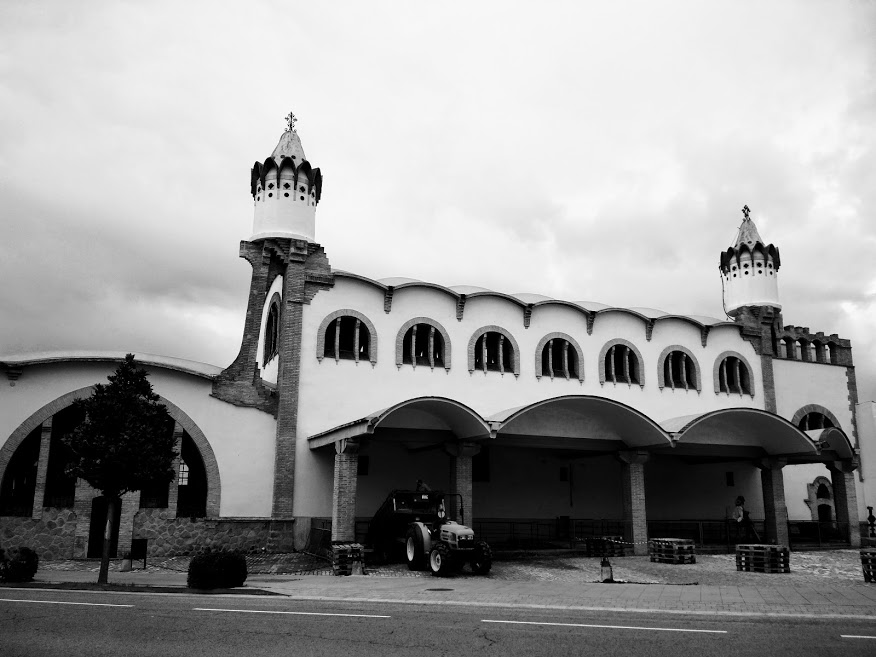
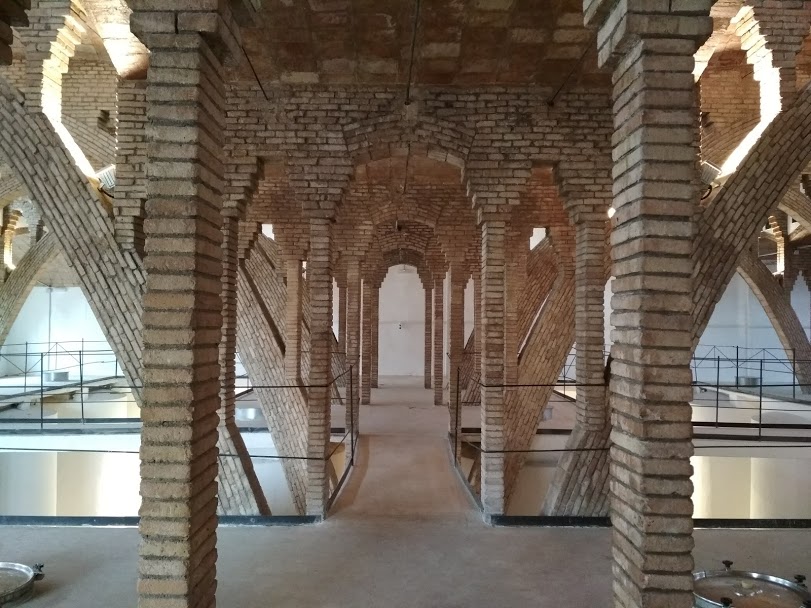
One of the most important cultural sites of the town is a wine cathedral. It is a cooperative cellar in the modernism style. There are three main compounds, which make this cellar a historical and cultural monument and a tourism attraction at the same time. The building, which is called “wine cathedral” because of the architectural features of modernism. A community of winemakers as it is a cooperative cellar and represents all the winemakers, who participate. This cellar unites 295 winemakers, who don’t consider each other as competitors, but more as a part of one community. A part of the history of the region and winemaking in rebel 20th century, reflecting political, economic, social changes. As the cellar is a historical monument and is protected, the production is not here right now; but the building is often used for tours.
Corbera d’Ebre and the Civil War
Corbera d’Ebre is first of all known because of sights connected to the Civil War, especially the Battle of the Ebro, which took place very close. Almost all of the town was destroyed by bombs.
Now visitors can see the ruins of the buildings, cathedral. There is also a museum, where you can learn more about the history of the Civil war and the Battle of the Ebro. But, as for me, the biggest interest is represented by the ruins of the village. The most impressive is a cathedral, as one of my friends told: “Even if you have seen plenty of different cathedrals in your life, you will remember this for sure”. That is true. A demi-ruined cathedral, with a glass roof, is the best representation of a painful history, but not a broken culture of the place.
Villages of Terra Alta
Dels Arcs economy is driven by winemaking. There are several wineries. It is also interesting to visit a festival, related to culture and winemaking. There is a nice restaurant here – Nou Moderno. It is a family hotel and restaurant complex. They propose classic dishes based on local products, parring with Terra Alta wines. Special attention is to local olive oil, which is also an important product of the region.
Batea is a medieval village on high Plato, full of wineries. They have a wine festival in August.
Les Planes D’Almudefer impresses with a stunning view of rocks. It is the right place to study differences of wines due to microclimate.
La Cendrosa I L’Acoula is known by a natural park, view of mountain ranges.
Bot is a village with olive oil production. Here Green Trail – tour green route – starts. The village also has natural sights, historical medieval places.
Pinell De Brai is known by its cooperative wine cathedral.
Arnes proposes the pools of crystalline waters for bathes. The honey interpretation centre is also here.
Horta De Sant Joan is a picturesque village, where Picasso centre is situated. By the way, the artist lived in this place for some period of his life.
Prat De Comte is where the highest mountains in the region.
Tourist Routes in Terra Alta
Foodies will appreciate the routes like“The Paisatges del Vi” (around vineyards) and “Ruta de l’Oli” ( olive oil trail). There are several bike routes for different difficulties. The Peace Path connects different places related to the events of the Civil War.
Follow me on Facebook and Instagram to Travel Around the Wine together!
Tip of the day. We all must have been in this situation. A nice bottle of wine. You have opened it. A small wine tasting. And … Wine is left … What to do with an open bottle of wine? Do not worry! With the right approach, it’s not so scary!
One manufacturer of cork caps was once asked why it is so difficult to stick the cork back into an open bottle of wine. He smiled and said:
“The cork is angry that you did not finish the wine and it bursts with so much frustration”.
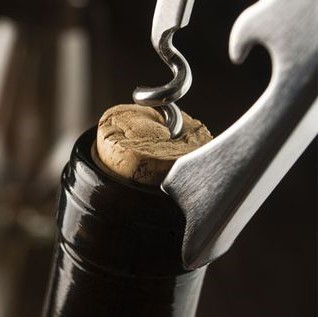
In reality, the thing is the structure of the cork. This material is very porous and elastic. When bottling, the cork is compressed as much as possible using special equipment. When you uncork a bottle of wine, you release a squeezed cork. Freedom! It relaxes and returns to its original volume. And the stopper does not want to shrink again voluntarily. And who would like to?
What to do with an open bottle of wine?
First of all, the bottle needs to be closed! The fact is that one of the main enemies of wine is air. The wine is getting oxidized and spoiled. Therefore, if you want to enjoy your wine tomorrow and the day after tomorrow, then you must minimize the contact of wine with oxygen. There are several simple devices for this. They do not take up much space and are not expensive. So if you like to taste wine. Or drink it in moderation. If you live alone. It is worth thinking about its acquisition. After all, the life of your wine can be extended. And your pleasure, respectively, too.
The main ways to save wine
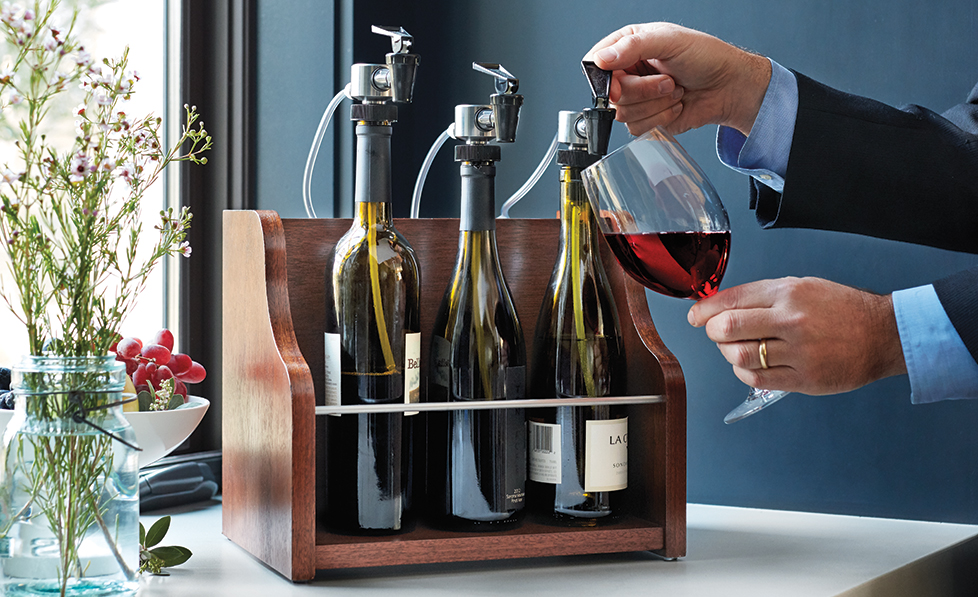
– Carbon dioxide dispenser. It is usually used in restaurants. The dispenser is put on the neck of the bottle. Carbon dioxide in the right concentration neutralizes the effect of air in an open bottle of wine.
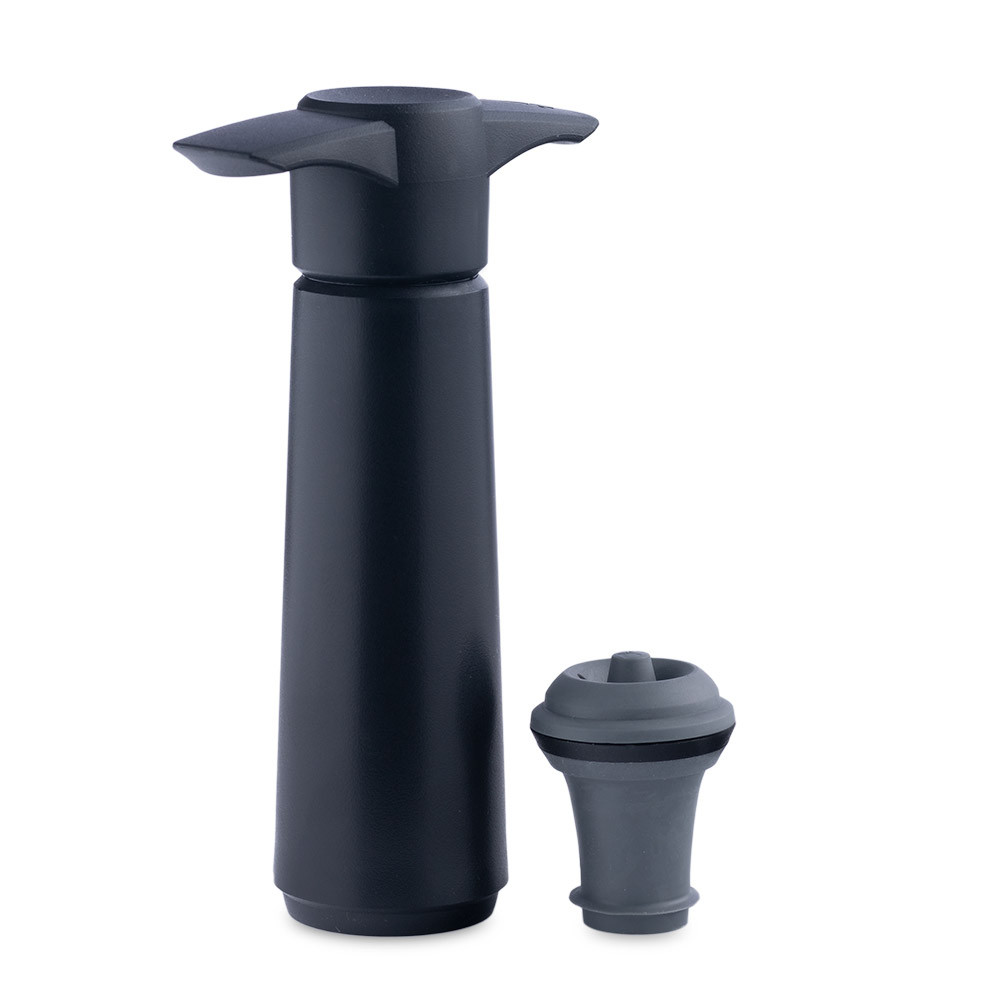
Vacu-vin is a tiny pump that pumps oxygen out of an open bottle of wine. A special plug does not allow the oxygen to get inside the bottle again. At home – this is the most effective way to keep an open bottle of wine, as for me.
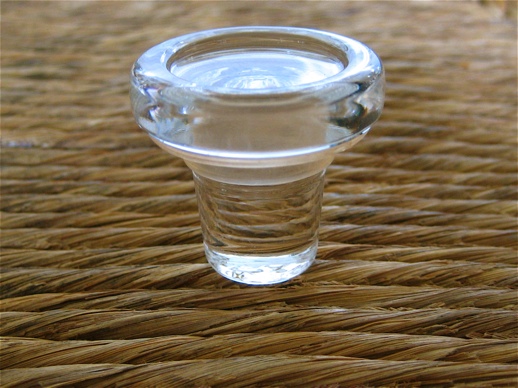
Glass stopper. A little less efficient, but as simple as possible. You cannot pump out air that has already entered your open bottle of wine. But with this sealed cork, you can protect your wine from a new dose of oxygen.
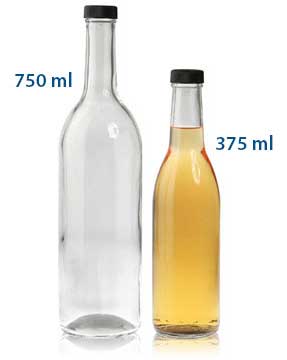
A smaller bottle. The larger the volume of oxygen in the bottle, the faster and more oxidized the wine. If you have drunk half a bottle of wine and decided to leave the other half for tomorrow, then look for a smaller bottle. For example, 375 ml. You pour your wine into this small bottle, there is almost no room for oxygen inside. Close it tightly and voila. The wine is saved!
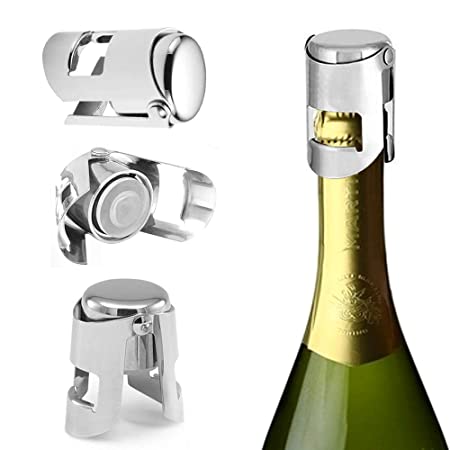
Stopper for an open bottle of sparkling wine. There is a cork for sparkling wines. After all, we need not only to protect the wine from oxygen but also to preserve the bubbles. A special cork is put on the neck of the bottle and snaps. So the wine is protected from oxygen. And the pressure inside the bottle is also maintained, which gives us this charming sparkling effect.
Well, taste the wine in moderation! Take care of yourself! And your wine!
If you want to receive more useful wine tips, follow me on Facebook and Instagram!