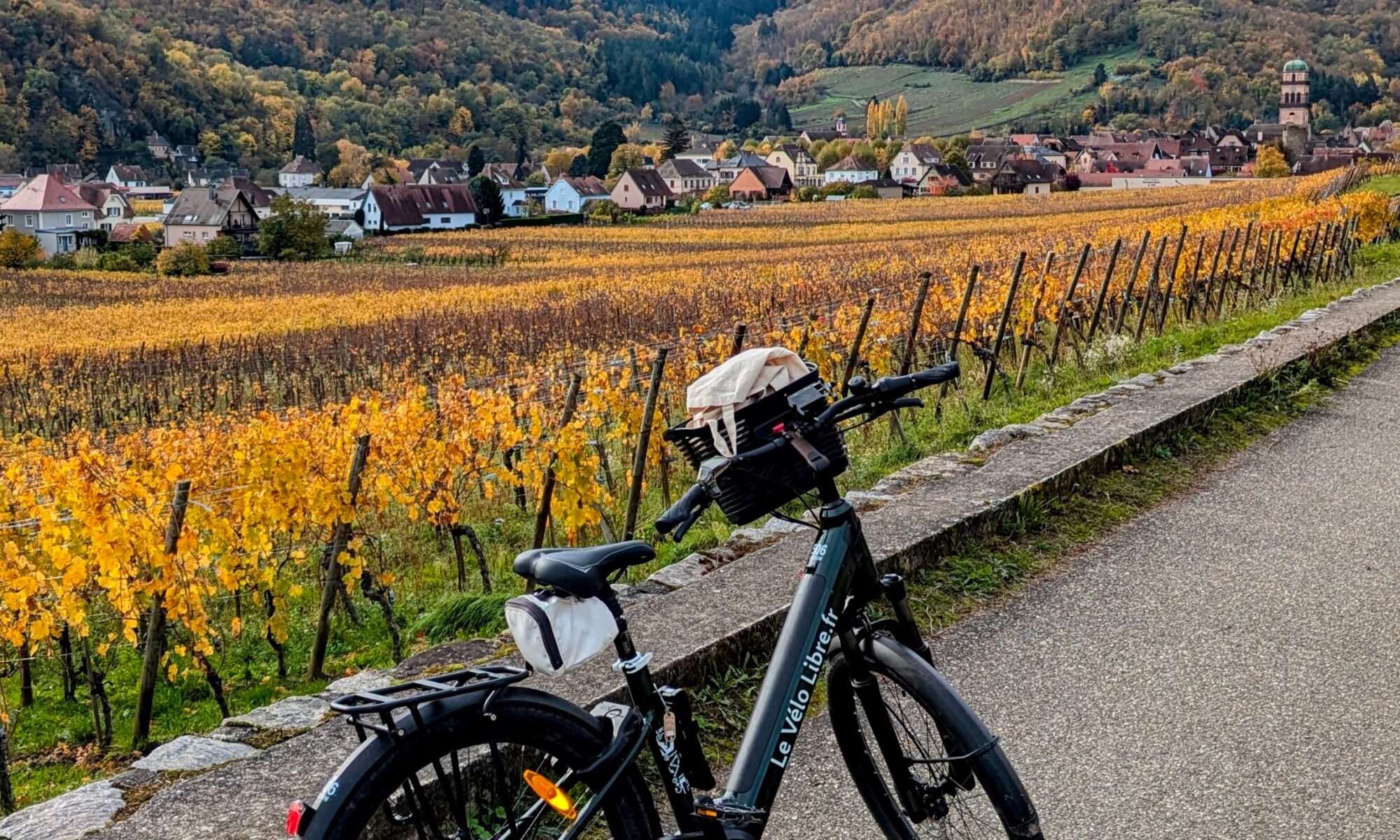
Some places capture your heart not just through their landscapes, but through the way they taste. Alsace, with its ribbon of vineyards stretched along the Route des Vins, is one of those places. I spent a few unforgettable days cycling between the region’s storybook villages, meeting passionate winemakers, and discovering wines of astonishing character and diversity. From bone-dry Rieslings to fragrant orange wines, Alsace revealed itself as a land where history, terroir, and human craftsmanship come together in a glass. Here are some of my impressions, discoveries, and delightful surprises from this magical wine route.
Riesling: The Eternal Star of Alsace
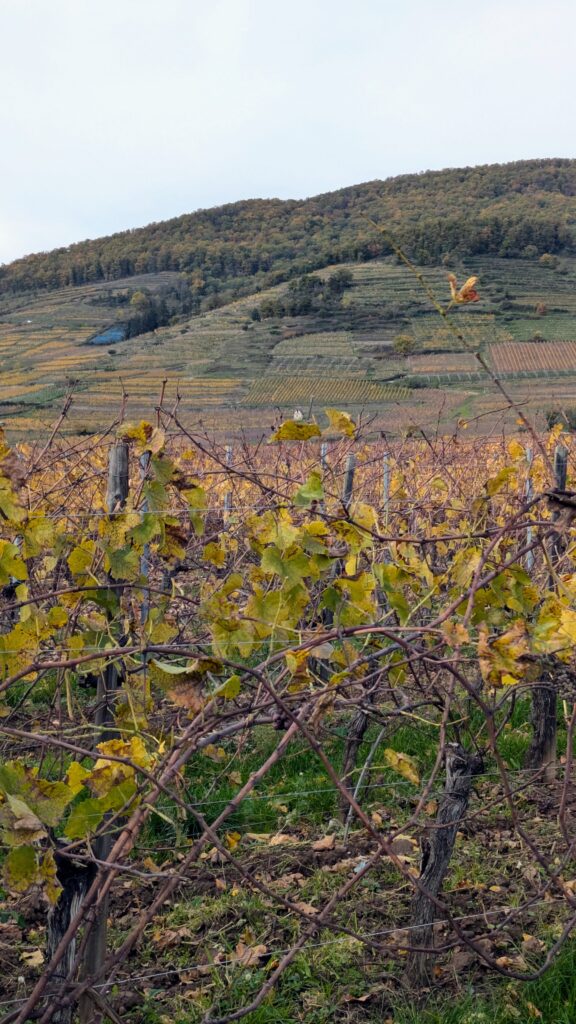
If Alsace had a single ambassador grape, it would be Riesling — and I must confess, it’s currently my wine crush. I often hear people say they don’t like Riesling. My answer? You haven’t found your Riesling yet.
This grape is a true chameleon: from bone-dry and razor-sharp to lusciously sweet and honeyed, it expresses every shade of balance between sugar and acidity. In Alsace, Riesling isn’t just a wine; it’s a lesson in contrast and precision — a dance between clarity and depth, power and finesse. Each sip feels like sunlight captured in crystal.
The Route des Vins: Cycling Through a Living Postcard
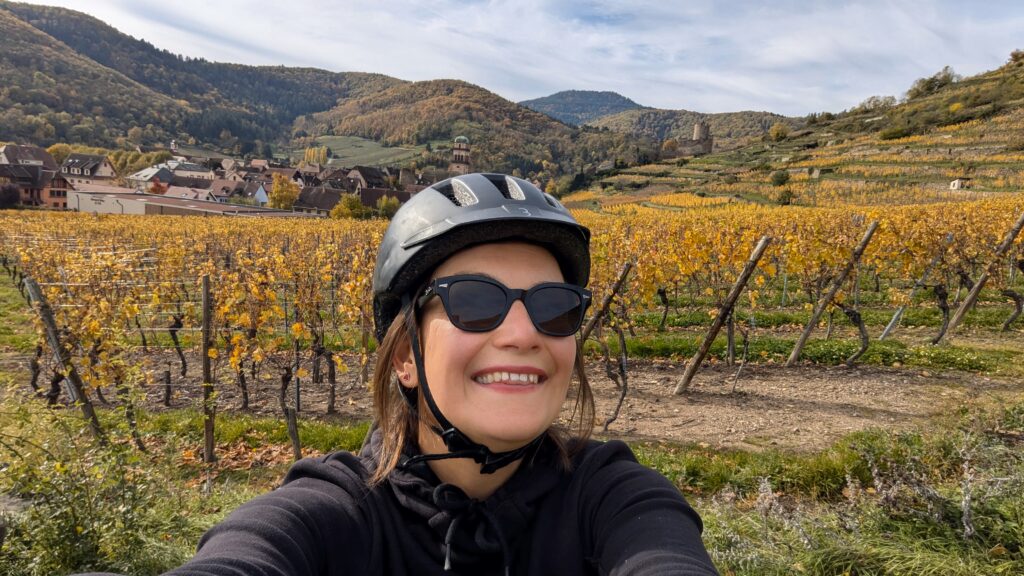
The Route des Vins d’Alsace is more than a scenic drive (or in my case, a glorious bike ride) — it’s an open-air museum of viticulture and architecture. Vineyards climb steep hillsides, while below lie perfectly preserved medieval villages, each one lovingly maintained and blooming with flowers.
What truly surprised me was how immaculate everything is, considering the region’s turbulent history. Alsace has changed hands between France and Germany several times over the centuries, yet it has emerged with its heritage intact — and perhaps even more beautiful for it. (Had Russians been involved, I suspect the story might have ended quite differently!)
Red Renaissance: Pinot Noir Takes the Stage
Traditionally, Alsace has been a white wine country, but the reds are now catching up — thanks to climate change and innovative winemaking. Pinot Noir is thriving here, often made using vendange entière, where whole bunches (including stems) are pressed. This method requires perfectly ripe grapes; otherwise, the stems can add harsh tannins. The reward is a red wine that’s perfumed, structured, and complex.
Some winemakers are even experimenting with Syrah — imagine that in Alsace! It’s a bold step for a region known for whites, but one that shows Alsace’s spirit of quiet innovation.
One Producer, Many Stories
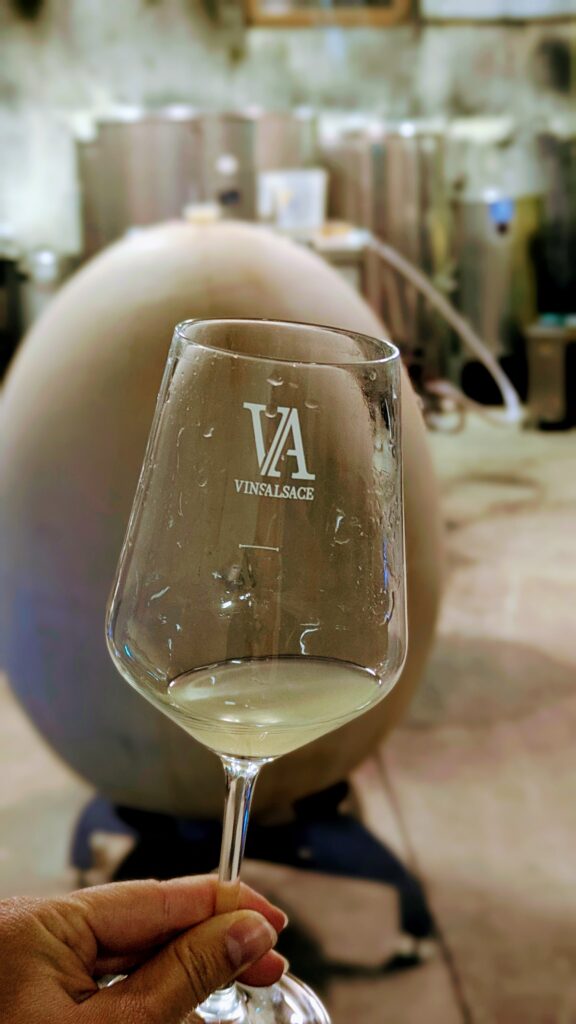
Visiting an Alsace winery is like stepping into a microcosm of the entire region. A single producer can easily make twenty or more different wines — from various grape varieties, vineyard sites, and sweetness levels.
This incredible diversity reflects the patchwork of Alsace’s terroir: every slope, every parcel tells a different story. It’s both thrilling and slightly overwhelming, but it also means there’s always something new to discover.
The Quiet Revolution: Toward a Premier Cru System
The word on everyone’s lips in Alsace right now is “Premier Cru.” While the classification has not yet been formally approved, the region has effectively developed its own hierarchy: from Alsace AOP, to communal or village wines, to lieu-dits, and finally Grands Crus.
The only problem? The labels can look confusingly similar, with the key details often hiding in small print on the back. Still, the growing recognition of terroir quality is a real step forward.
The Noble Quartet
Alsace’s reputation for white wine rests mainly on its noble grapes: Riesling, Pinot Gris, Gewürztraminer, and Muscat.
Each brings something unique — Riesling’s purity, Pinot Gris’s depth, Gewürztraminer’s exotic perfume, and Muscat’s joyful fruitiness. Muscat can be inconsistent, yes, but at its best, it’s like biting into a sun-warmed grape. Together, they form the core of what makes Alsace so distinctive in the world of wine.
Grand Cru: Greatness and Debate
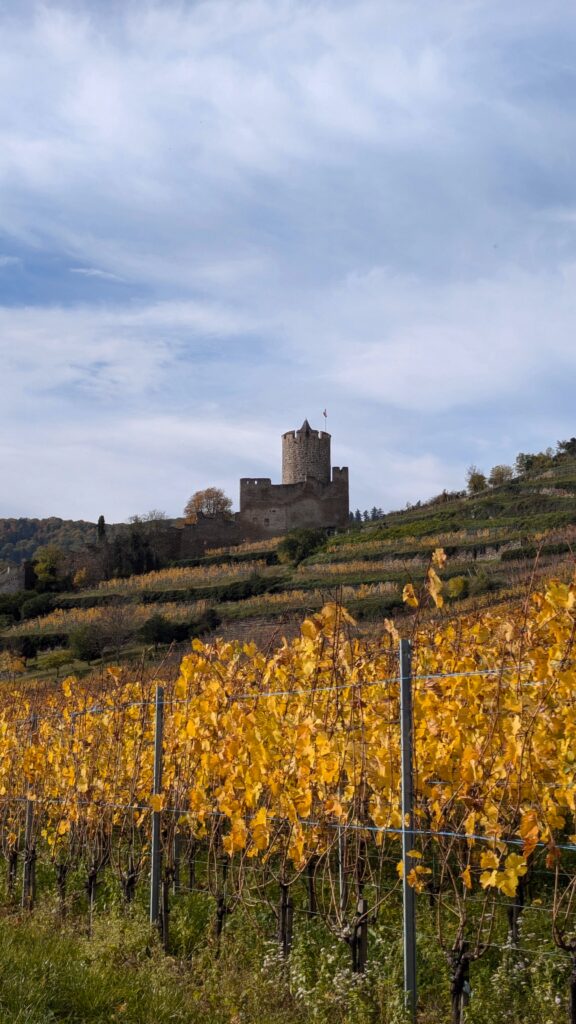
Most villages along the Route des Vins boast one Grand Cru vineyard, often the steepest slope nearby. This was born from a French spirit of liberté, égalité, fraternité — every village deserved its star.
Yet, today, the Grand Cru system is under debate. There are too many sites, and not all are of equal quality. With climate change shifting ripeness and balance, some top producers now choose to bottle their finest wines from exceptional plots without using the Grand Cru name. In Alsace, reputation is increasingly built not just on terroir, but on the producer’s skill and integrity.
The Power of Vintage
Vintage matters deeply in Alsace, perhaps more than in many other regions. Because styles vary from bone-dry to richly sweet, the weather’s influence is magnified.
Warm years produce opulent, fruit-driven wines; cooler, more “classical” vintages deliver freshness and higher acidity — ideal for purists like me. Each vintage offers something for every palate.
Sadly, 2025 will see no botrytized dessert wines, as noble rot didn’t develop this year — a reminder that nature always has the final say.
The Pressing Lesson: A Personal Discovery
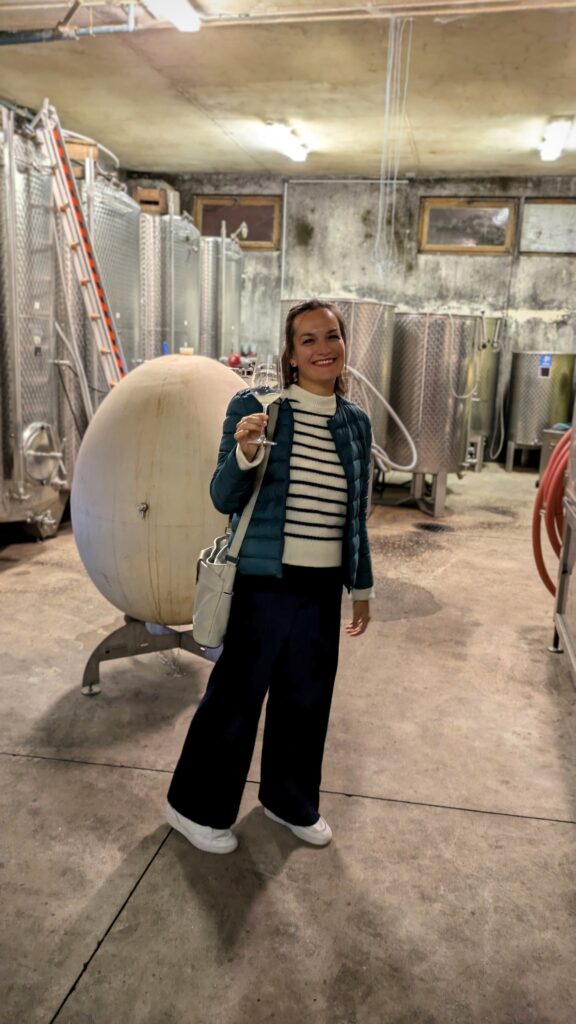
At domaine Huntz-Schaeffer, I had the rare chance to taste two wines made from the same parcel and grape, with only one difference — the length of pressing.
The first, a quick press of destemmed grapes, was light and subtle. The second, a long press of whole bunches, revealed stunning aromatics and richer texture. It was a revelation: such a small change in technique can completely transform a wine. A true “aha” moment for any wine lover!
New Grapes, New Surprises
Alsace is not standing still. I tasted a Sylvaner aged in oak, and it was one of the most surprising and delightful wines of my trip. Blind, I’d never have guessed it was Alsace Sylvaner — it had depth, complexity, and a sense of quiet confidence.
I can’t wait to share this bottle at my next wine tasting class — proof that Alsace’s potential still has new chapters to write.
Orange Wines: Aromatic, Dry, and Full of Soul
Given Alsace’s wealth of aromatic varieties, it’s no wonder the orange wines here are so compelling. Usually dry, textured, and gastronomic, they bring together the perfume of classic whites with the structure of reds.
These are wines with personality — rich, smooth, and beautifully food-friendly. I already have a few in my collection, waiting to shine at our next Tour de France tasting in Nice!
A Land That Stays With You
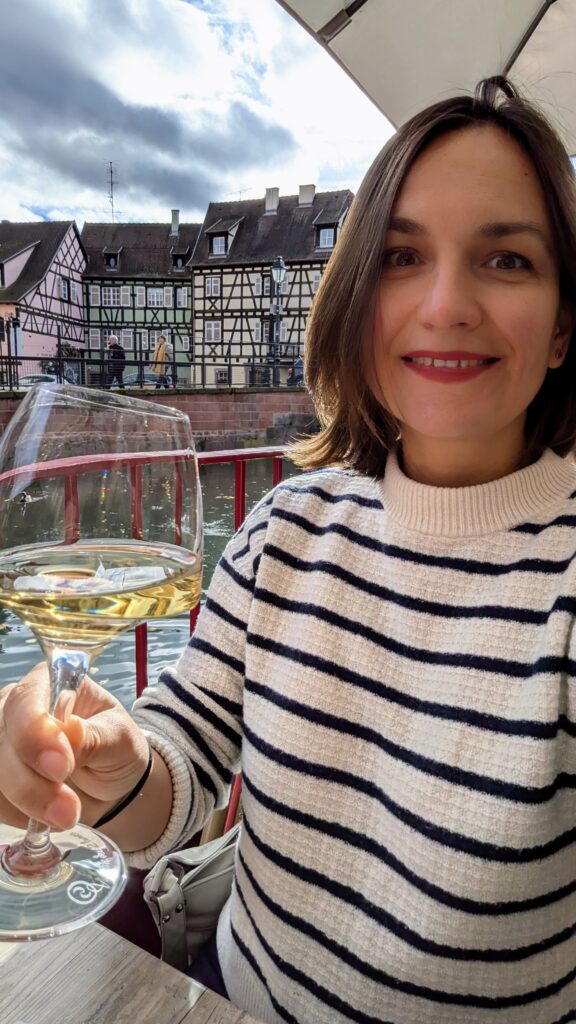
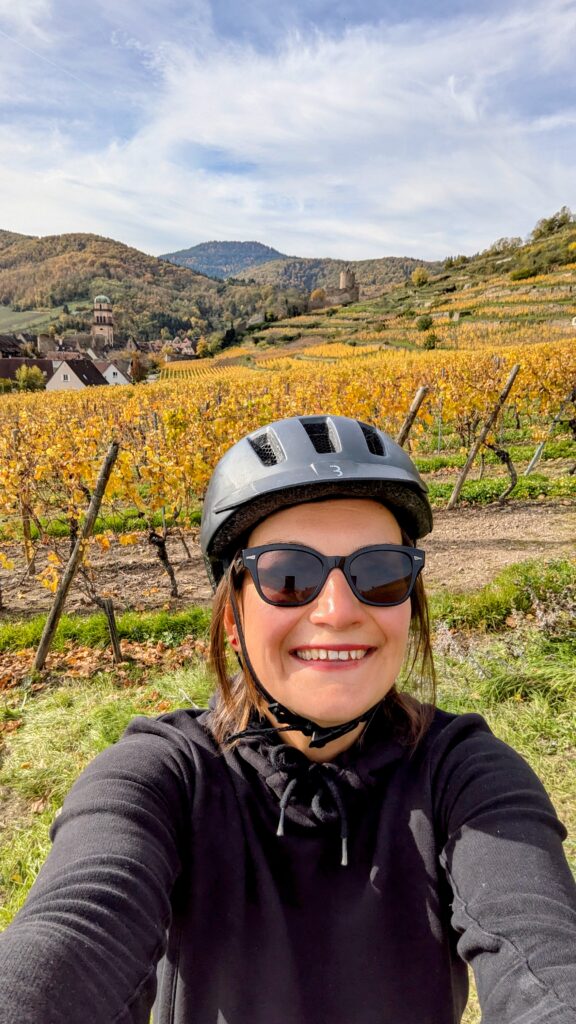
Cycling through Alsace, I felt that rare connection between place, people, and product — where every vineyard, every village, and every glass tells part of a living story.
Alsace is a region that doesn’t shout; it sings — softly, in harmony, and always with grace. Whether you’re chasing Riesling’s brilliance, exploring new reds, or discovering a hidden Sylvaner, one thing is certain: Alsace will charm you, sip by sip.