

Nice sits at a crossroads of French and Italian influence, and nowhere is that more obvious than on a plate. Wander through the Old Town at lunchtime, and you’ll catch the smell of olive oil, chickpeas, and slow-cooked tomatoes drifting out of tiny hole-in-the-wall kitchens that have been doing the same thing, the same way, for generations. If you’re planning a trip and want to know what to actually eat — and drink — while you’re here, this guide covers the essentials: the dishes, the products, the wines, and the best ways to try them all.
What Food Is Nice Famous For?
Niçoise cuisine (locals call it cuisine nissarde) grew out of necessity as much as tradition. Nice was part of the Kingdom of Sardinia until 1860, and the food still shows it: lots of olive oil instead of butter, chickpeas and wheat flour used in inventive ways, anchovies and small fish from the Mediterranean, and vegetables that thrive in the region’s dry, sunny climate — tomatoes, courgettes, aubergines, and chard.
It’s peasant food at heart, built around what fishermen, farmers, and market vendors had on hand. That’s part of why it still feels so genuine today. A proper foodie visitor to Nice is not chasing fine dining — they are chasing the small stalls, hole-in-the-wall bakeries, and family-run shops that have kept these recipes alive.
Traditional Niçoise Foods You Need to Try
A few dishes define the local table, and most of them are street food or market food rather than restaurant fare.
Socca is the one everyone asks about first. It’s a large, thin pancake made from chickpea flour, olive oil, and water, cooked in a wood-fired oven on a round copper pan and served in messy, slightly charred pieces, usually sprinkled with black pepper. It’s eaten standing up, with your hands, ideally still hot from the oven. Ask a local what socca is and they’ll probably tell you it’s less a recipe than a ritual — a mid-morning or late-afternoon snack that’s been sold from the same market stalls for over a century.

Pissaladière looks like a pizza but isn’t one. It’s a soft, olive-oil-rich bread base topped with slowly caramelised onions, black olives, and a lattice of anchovies (sometimes anchovy paste instead of whole fillets). No cheese, no tomato sauce — just sweet onion, salty fish, and good bread. So what is pissaladière, really? Think of it as Nice’s answer to the flatbread, predating pizza by centuries and reflecting the strong Ligurian and Genoese influence on the city.

Beyond those two, look out for:
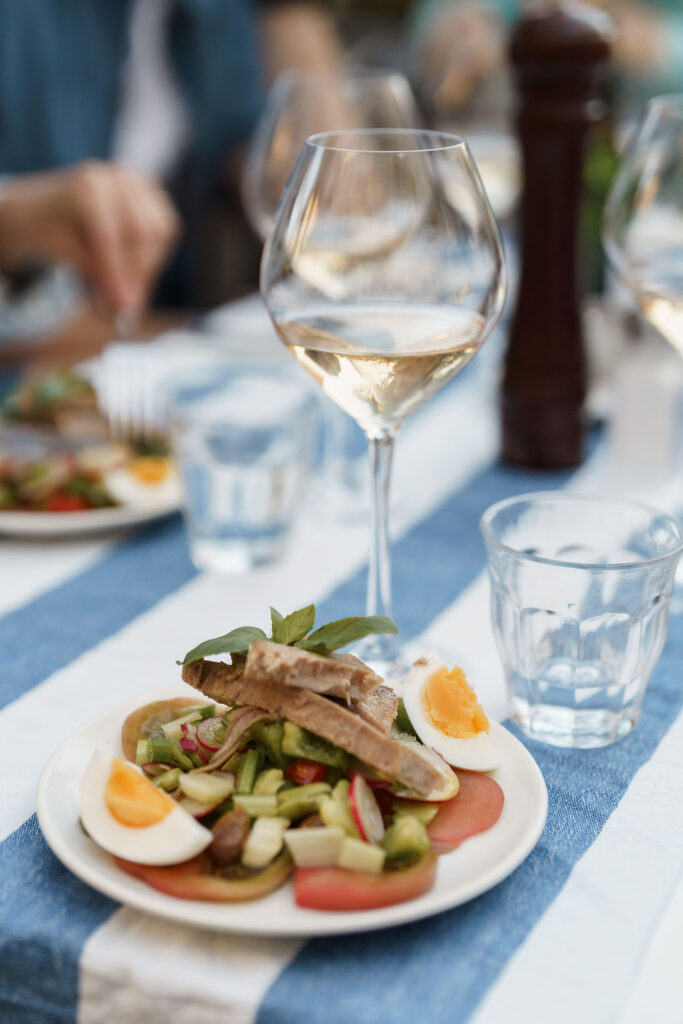
- Salade niçoise — the original version uses raw vegetables, tuna or anchovies, olives, and hard-boiled eggs, with no cooked potatoes or green beans (a common misconception outside France).
- Pan bagnat — essentially a salade niçoise stuffed into a round bread roll, pressed so the bread soaks up the dressing.
- Petits farcis — vegetables like tomatoes, courgettes, and onions hollowed out and stuffed with a meat or breadcrumb filling, then baked.
- Daube niçoise — a rich beef stew slow-cooked in red wine, often served with pasta or polenta.
- Tourte de blettes — a sweet-savoury tart made with Swiss chard, pine nuts, and raisins, sometimes dusted with sugar.
Together, these dishes are what people mean when they talk about traditional food Nice is known for — simple ingredients, strong flavours, and recipes that rarely change from one generation to the next.
Where Can Visitors Try Local Specialities?
The best introduction to Niçoise food is the Cours Saleya market in the Old Town, running most mornings except Mondays. It’s where locals still buy their produce, and several stalls specialise in socca, pissaladière, and other savoury pastries you can eat on the spot.
Beyond the market, look for small family-run cavistes (wine and food shops), traditional bakeries in the Old Town’s narrow streets, and casual counter-service spots rather than sit-down restaurants — much of this food was never meant to be eaten with a knife and fork. For a curated shortlist of where locals actually eat, VinoLove’s guide to restaurants in Nice is a useful starting point, and the gourmet shopping guide points you toward the best artisan producers if you’d rather cook with local ingredients yourself.
Local Products Food Lovers Should Try

Nice’s food identity isn’t limited to hot dishes. A handful of artisan products are worth seeking out on their own:
- Olives and olive oil — the small, black Niçoise olive (Cailletier) has its own AOC, and local mills still press oil the traditional way.
- Candied fruits — a Niçoise specialty since the Renaissance, made from fruit slow-cooked in sugar syrup; the city’s oldest shops still use the original methods.
- Truffles — the surrounding hills produce excellent black truffles in winter, showing up shaved over pasta, eggs, or local cheeses.
- Honey, jams, and pastes — often flavoured with lavender, chestnut, or fig from Provençal orchards and hillsides.
- Local liqueurs, including limoncello made with Riviera citrus.
These are the kinds of things worth packing in your suitcase, and they’re exactly the products a well-run food tasting in Nice locals recommend will introduce you to — not through a shop window, but from the people who actually make them.
What Wines Pair Well With Niçoise Food?

Nice sits within the Bellet AOC, one of France’s smallest and least-known wine appellations, tucked into the hills just above the city. Bellet wines rarely leave the region, which makes tasting them here a genuinely local experience rather than something you could find at home.
A few pairing basics:
A local rosé from Provence more broadly is also a safe, food-friendly choice if Bellet isn’t on the menu — it’s what most Niçois reach for at lunch.
Bellet rosé or a light Provençal rosé works beautifully with socca, pissaladière, and salade niçoise — the acidity cuts through the olive oil.
Bellet white, often made from the local Rolle grape, pairs well with fish, anchovies, and pan bagnat.
Bellet red, from Braquet or Folle Noire grapes, has the structure to stand up to daube niçoise or dishes built around slow-cooked beef.
Cheese pairing follows the same logic: soft local cheeses lean toward the whites and rosés, while firmer, aged cheeses hold their own against the reds.
The Best Way to Experience Nice’s Food and Wine Scene
Reading about socca is one thing; standing at a market stall watching it come out of a wood-fired oven is another. If you want a genuinely good food and wine experience in Nice, look for something that combines both — proper tastings of the classic dishes, plus wines chosen to match them, ideally explained by someone who actually knows the producers.

That’s the idea behind VinoLove’s Nice Food & Wine Walking Tour. Over 3.5 hours, small groups walk through the Old Town trying more than 20 tastings: Niçoise street food like socca and pissaladière, artisan products such as candied fruits and truffle specialities, local olives and olive oils, cheese, and regional liqueurs like limoncello. The tour ends with a sommelier-led wine finale — three local wines paired with local cheese, with the stories behind each bottle explained along the way.
Why a Guided Food Tour Is Useful for Discovering Local Specialities
Nice’s best food isn’t always easy to find on your own. Many of the shops and stalls that do things properly are small, unsigned in English, and easy to walk past if you don’t know what you’re looking for. A guided Nice food tour solves that problem in a few practical ways:
- You skip the guesswork. A local guide knows which stalls are the real deal and which are aimed purely at tourists.
- You taste more, in less time. Twenty-plus tastings in one afternoon would take days to track down on your own.
- You get context. Knowing that pissaladière predates pizza, or that Bellet wine barely leaves the region, changes how you experience it.
- A sommelier’s input matters. Pairing wine with dishes like daube niçoise or fresh cheese isn’t intuitive if you don’t already know the region’s wines.
- It’s social and low-pressure. Small groups make it easy to ask questions and actually learn something, rather than just eating and moving on.

For travellers who want to understand Niçoise food rather than just sample it, a guided tasting experience does in one afternoon what would otherwise take a full week of independent exploring.
FAQs

What is the most famous food in Nice? Socca is generally considered the most iconic — a chickpea-flour pancake cooked in a wood-fired oven and sold at markets across the Old Town.
Is socca served hot or cold? Always hot, straight from the oven. It’s traditionally eaten within minutes of being cooked, torn into pieces by hand.
What’s the difference between pissaladière and pizza? Pissaladière has no cheese or tomato sauce. It’s a bread base topped with caramelised onions, olives, and anchovies, and it predates pizza as we know it today.
Do I need to book a food tour in advance? Yes, it’s recommended, especially in peak season (spring through autumn) when small-group tours fill up quickly.
What wine region is closest to Nice? The Bellet AOC, located in the hills just above the city, is the closest and one of the smallest wine appellations in France — most of its wine is consumed locally rather than exported. We offer excellent Vineyard Tours to show and explain it to you.
(c) Atharv Puri