You probably have heard about Napoléon Bonaparte, later known by his regnal name Napoleon I. Napoléon was a brilliant military man who rose through the ranks, fighting for the French revolutionary forces. He staged a coup d’etat and named himself Emperor in 1804.
He was eventually defeated in 1815, but during his reign, he threatened the entire European continent, and it took all of Europe to defeat him. His lasting legacy, the Code of Inheritance, mandated that all holdings be divided equally among each child.
The Napoléonic Code in Bourgogne vs. Bordeaux:
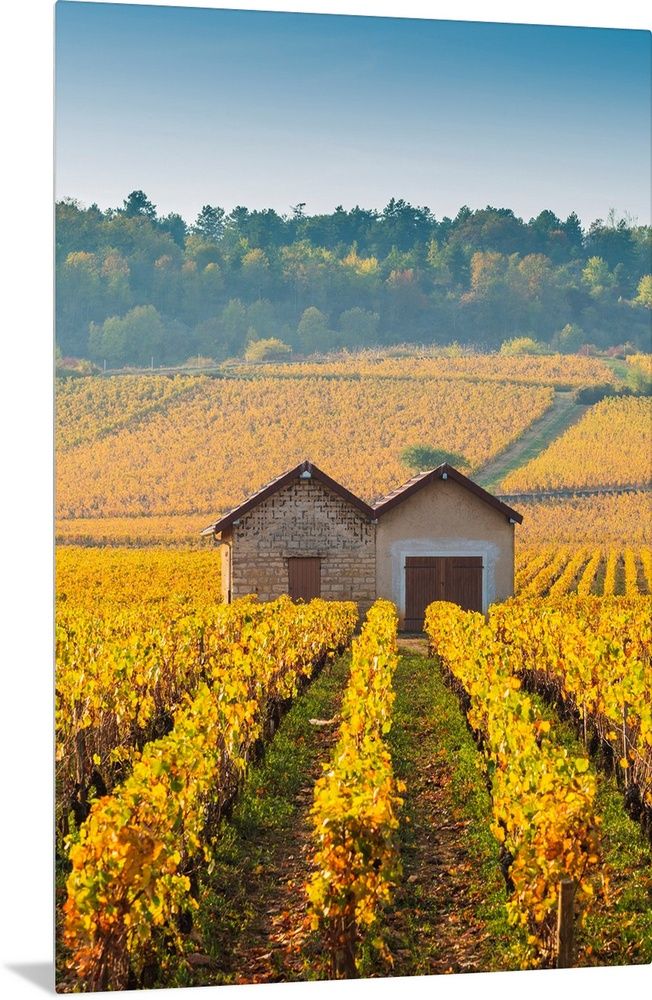
Bourgogne was quite rural during the Napoléonic Era. Landowners adopted Napoléon’s Code of Inheritance quite literally and divided their vineyards among each subsequent child in equal parts. Compounded over time, this resulted in extremely small holdings that were unfeasible for commercial wine production.
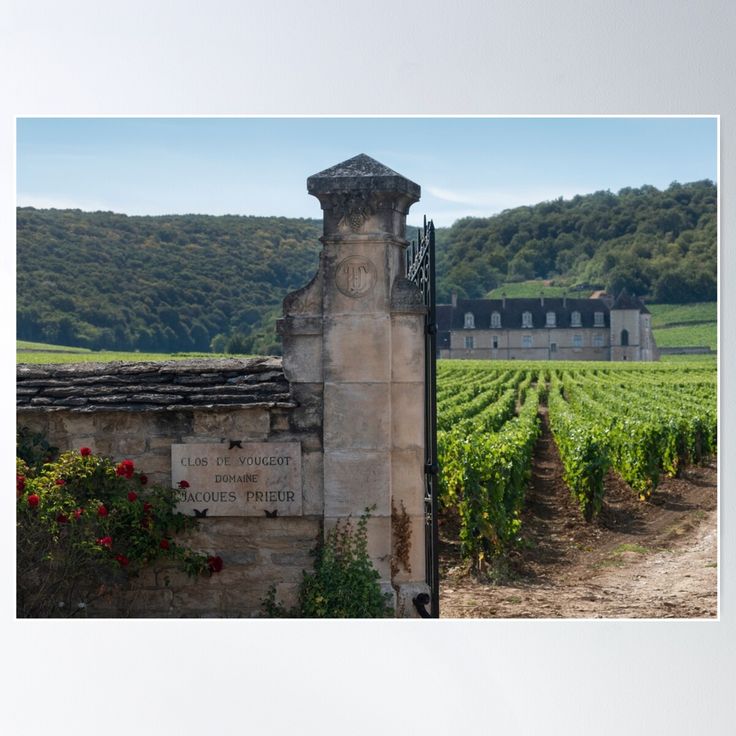
This heralded the birth of the Burgundian négociant who could purchase fruit from many winegrowers to bottle under a single label.
As of 2019, the average individual vineyard holding in Bourgogne was 6.5 hectares; this diminutive sizing makes it difficult to produce proprietary labels. Moreover, these holdings are rarely contiguous, so a small producer could make many wines under many appellations, none of which would be in a sufficient quantity to make it worthwhile. In 2019, there were 3,577 domaines, 16 co-operatives and 266 wine merchants (négociants); 52% of all the wine produced is sold through these merchants.
Négociants are companies that purchase grapes or wine from growers who are too small or do not have the inclination to bottle and market their wine. Just as within the producer arena, négociants possess different levels of talent. Are négociants wines inherently inferior to domaine bottlings? No. More often than not, the négociant has the capital to purchase new equipment, barrels, and tanks to increase the quality of their bottlings. Today, many négociants are also growers, and growers have become négociants as well. A recent trend is that of the micro-négociant, an enterprise that works on a much smaller scale than a traditional négociant. They typically focus on individual sites or appellations and produce terroir-driven, high-end small bottlings.
On the other side of France, in Bordeaux more specifically, where the region had been involved in the business of wine since the marriage of Eleanor of Aquitaine and King Henry II and the ensuing 300 years of trade with England.
Savvy and aware, the Bordelais adhered to Napoléon’s Code of Inheritance by dividing their estates as paper shares of stock vs. rows of vines, thus maintaining the integrity and size of their holdings. Another significant event that happened also in Bordeaux is the “Classification of 1855”. At the request of Napoléon III, wine was added to the list of national “strengths” and incorporated into the showcase of new industries and new technologies on display at the Universal Exposition of 1855.
The Bordeaux Chamber of Commerce was asked to build a display, which they did. They also incorporated a listing of 87 Bordeaux Chateaux, which were ranked based on the prices these wines commanded in the marketplace. This historic document went on to become the “Classification of 1855” which has driven Bordeaux sales ever since.
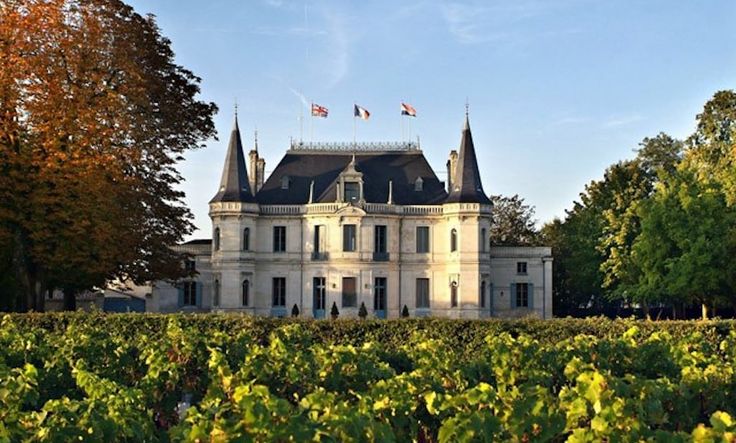
Funnily enough, the 1855 list was never intended as a classification system, nor was it ever ratified as a classification system. The listing itself was a “working document” put together by the Union of Brokers attached to the Bordeaux Commodities Market and served as a reference guide for setting prices and/or paying taxes. It had at least two dozen different permutations in the 100 years prior. The list of 1855 simply reflects, by tiers, the price points at which the top wines in Bordeaux were selling in the 19th century. It earned fame because it was incorporated into a display of Bordeaux wines at the Universal Exhibition in Paris in 1855.
It has since become the economic lodestone for Bordeaux’s global wine sales, separating (for the most part) the “haves” (of fame and fortune) from the “have-nots.” The Bordeaux Chamber of Commerce decided to set up a showpiece at the Universal Exhibition and solicited 6 bottles of wine from any wine producer who cared to donate to the cause, then dressed these bottlings with generic labels that identified them by state, commune, region and vintage.
All in all, the exhibit was underwhelming in presentation. To dress it up a bit, a giant (and accurate) map of the region was placed on display along with the “Classification of 1855”.
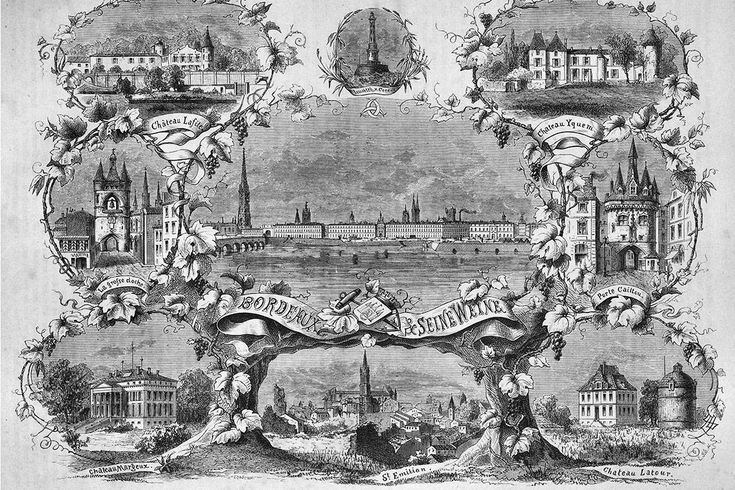
Eighty-seven chateaux were ranked on the original document: 1 chateau from Graves, now Pessac-Léognan, 26 chateaux from Sauternes and Barsac and 60 chateaux from the Médoc. The ranking placed red wine producers in one of five categories: first, second, third and fifth growths, with first being the best. Chateaux crafting sweet wines were placed into three categories: Premier Cru Supériur, Premier Cru and Deuxieme Cru. Interestingly, the wine that was selling for the highest price back in 1855 was Chateau d’Yquem. For this reason, it alone bears the title Premier Cru Supériur.
The fact that the list includes no wines from the Right Bank and no dry whites is a reflection of their lack of stature at the time. They were certainly considered. There have been a few changes to this classification system. Chateau Cantemerle was added while the Universal Exhibition was still in progress, changing the number of Médoc chateaux to 61. There are now 27 ranked wines from Sauternes/Barsac. Properties that were sold and divided maintained their status, and Pexoto no longer exists. However, the most significant change occurred in 1973 when Chateau Mouton Rothschild was elevated from second-growth status to first-growth status.
All-in-all the 1800s were a period of important changes and transitions and its effects are still resonating to this day.
(c) Carlo Pavia